
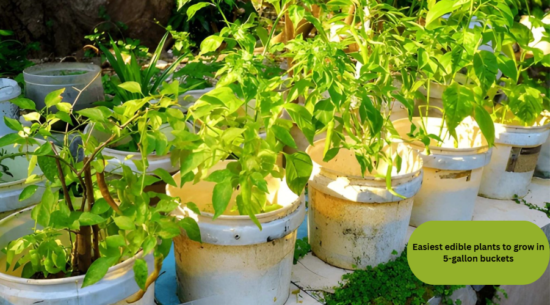
The easiest edible plants to grow in 5-gallon buckets are radishes, leaf lettuce, bush beans, small herbs like basil, and a single cherry tomato. Radishes pay off first, usually within a month. Each bucket needs drainage holes, a bag of potting mix, and a spot with real sun. Start with two crops from this list and add more once those thrive.
Sun changes the list more than anything else. The Farmers’ Almanac 2026 beginner guide sets six hours of direct light as the minimum for tomatoes, beans and cucumbers.
| Your situation | Start with |
| You want a quick win | Radishes, ready in about a month |
| Your spot gets little sun | Leaf lettuce and small herbs |
| Your patio bakes in full sun | Bush beans or one cherry tomato |
| You have room for one bucket | A mix of small herbs |
The easiest edible plants to grow in 5-gallon buckets, ranked by effort
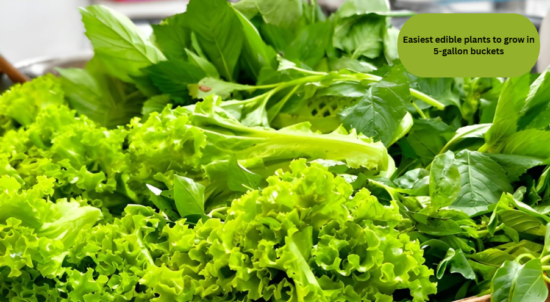
Radishes rank first, followed by leaf lettuce, bush beans, small herbs and one cherry tomato.
- Radishes are ready in 25 to 30 days, according to the University of Georgia Cooperative Extension.
- Leaf lettuce takes longer. True Leaf Market lists its Salad Bowl Green variety at 45 to 50 days, so check the packet for yours.
- Bush beans need 50 to 60 days on the same Georgia chart.
- Small herbs such as basil can be picked as they grow.
- A cherry tomato needs the most care and suits the sunniest spot.
Shallow roots make lettuce and radishes the safest starters. The Old Farmer’s Almanac says they grow fine in containers smaller than a bucket, so 5 gallons gives them plenty of soil.
Park the herb bucket where you’d keep a spice rack. It follows the same logic as kitchen organization ideas: whatever you grab daily should sit closest to the door.
Mismatched buckets look better with one coat of paint. That’s interior design thinking applied to a patio.
How the top crops compare on time, plant count and effort
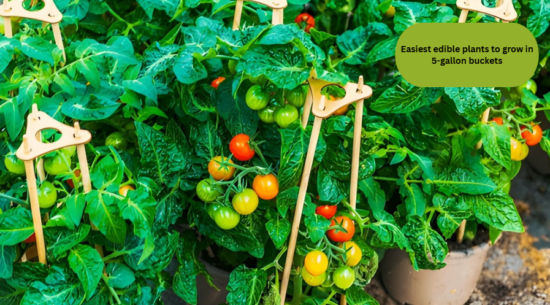
Radishes finish first, and cherry tomatoes demand the most attention.
| Crop | Days to harvest | Plants per bucket | Effort |
| Radishes | 25 to 30 | Up to 10 | Lowest |
| Leaf lettuce | 45 to 50 (one variety) | 3 to 4 | Low, but it bolts in heat |
| Bush beans | 50 to 60 | 1 | Moderate |
| Cherry tomato | Varies by variety | 1 | Highest, needs support and steady water |
| Small herbs | Pick as they grow | A few small plants | Low |
Day counts start at planting and shift with variety and temperature. The lettuce figure is a seed seller’s listing for one variety, not a tested average.A shadier patch, or the sunniest window inside home, suits greens and herbs better.
Plant counts differ by source. Gardening Channel fits ten radishes or one bush bean per bucket, while Epic Gardening allows three to four lettuce plants. When in doubt, plant fewer, because crowded plants shade one another.
You can map bucket positions in five minutes with pencil and paper, or with the design tools tech you’d use to plan a room.
Treat this table like a designmode24 design brief in miniature: each row sets the size, timing and workload for one bucket.
How to choose by space, time and skill level
Choose by sunlight first, free time second, and skill last.
- Balcony with under six hours of direct sun: grow leaf lettuce and small herbs.
- Sunny patio and weekend-only time: grow bush beans, plus one cherry tomato if you can check it daily.
- First attempt at growing food: start with radishes. Each round takes 25 to 30 days, so one bucket can host about three rounds in 90 days of cool weather.
- Only 60 days before frost: radishes and a fast lettuce variety fit easily, and bush beans just fit.
Borrow from kitchen layout ideas and keep the busiest zone short. Put the herb bucket a few steps from the door and the tomato where it gets the most light.
Write a short design designmode note for your space: sun hours, bucket count and how far the hose reaches.
What it takes to set up and keep a bucket going
Each bucket needs a food-grade container, drainage holes, soilless mix and a watering routine.
- The Alabama Cooperative Extension System calls for food-grade plastic and a drainage hole every 3 inches across the bottom.
- Hobby Farms advises avoiding buckets that hold pool chemicals, tar, asphalt, pesticides or herbicides.
- University of Kentucky Cooperative Extension says in its April 2025 guidance that a 4- to 5-gallon bucket suits one plant. It advises a commercial soilless mix, since garden soil alone isn’t recommended.
- Its May 2025 guidance from another county office says to push a finger two knuckles deep and water only when the mix feels dry.
Soggy mix suffocates roots, so the holes matter more than the bucket’s color.
Treat setup like a DesignMode24 project list: gather everything once, then build every bucket in one session.
Log planting and watering dates in a notebook or in a note titled www.designmode 24 and patterns show up fast.
When this advice doesn’t apply
Skip the 5-gallon bucket for potatoes, which The Old Farmer’s Almanac places in 10- to 15-gallon containers or grow bags.
Buckets also can’t feed a crowd. A bucket of radishes won’t cover a snack table at a designmode24 biggest sporting event watch party, so plan to buy extra.
Unfamiliar pests or leaf spots call for local expertise. Call your county extension office rather than using a decor site’s contact designmode form.
Questions beginners ask about bucket gardens
What is the easiest vegetable to grow in a 5-gallon bucket?
Radishes are the easiest vegetable for a 5-gallon bucket because they sprout fast and finish within about a month. Sow roughly ten seeds and thin any that crowd. Cool weather suits them best, so sow again once the first round is out.
Do 5-gallon buckets need drainage holes?
Yes, every bucket needs drainage holes, or water pools around the roots. A University of Tennessee Extension director drills one-inch holes and says half-inch holes also work if water drains freely. Drill several across the bottom, and lift the bucket on bricks so water can escape.
How often should I water vegetables in a bucket?
Water when the mix feels dry about two knuckles down, and expect daily watering in hot spells. Iowa State University Extension notes that container plants dry out quickly in sun and wind, and some need water every day. Keep adding water until it runs out of the holes.
Can I use any plastic bucket for growing food?
No, use food-grade buckets that never held chemicals such as pool treatments, tar, pesticides or herbicides. Chemical residue can leach into the potting mix and reach the plants. Restaurants and bakeries often sell or give away food-grade buckets, so ask before buying new.
Start with two buckets and two crops
The easiest edible plants to grow in 5-gallon buckets are radishes, leaf lettuce, bush beans, small herbs and one cherry tomato per bucket. Match the crop to your sun, give every bucket drainage holes and soilless mix, and check moisture before you water. Start with two buckets and grow from there.
- Find your sunniest spot and count its hours of direct light.
- Collect two food-grade buckets, drill drainage holes, and fill them with soilless mix.
- Sow radishes in one bucket and plant lettuce or herbs in the other this week.