

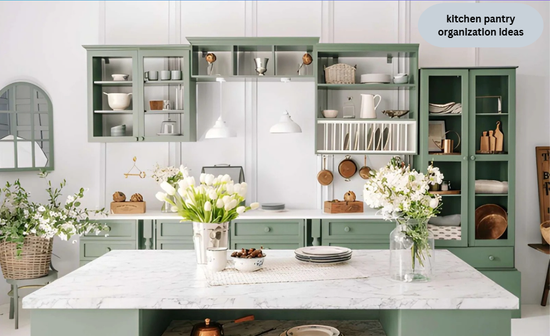
The best kitchen pantry organization ideas start with emptying every shelf, sorting food by how you cook, and giving each group one labeled home. Clear containers keep that order from slipping. Daily items go at eye level and heavy items go low. You’ll have a pantry that you can peruse in a matter of seconds if you check the dates as you sort.
What changes the answer most is the type of pantry you have: a walk-in, a reach-in cabinet, or no pantry at all. Each needs a different setup, and the choice fits inside wider kitchen organization ideas like drawer and cabinet planning.
Measure the space and pick the setup that fits your kitchen
Your pantry type decides what you should buy first, so measure shelf width, depth, and height before you shop.
| Your situation | Short answer |
| Walk-in pantry with wide shelves | Add shelf risers and stackable bins, and keep bulk items on the floor |
| Reach-in cabinet with deep shelves | Use pull-out drawers or turntables so nothing hides at the back |
| Narrow closet with shallow shelves | Hang door racks and use slim, single-layer bins |
| No pantry at all | Set aside a standalone unit or a tall cabinet next to the kitchen area. |
| Tight budget | Reuse jars and boxes you own, and buy only labels |
Deep shelves cause the most waste. Cans slide to the back and get forgotten.
Free room-planner apps are simple design tools tech. Sketch your shelves in one and test bin sizes before you buy anything.
If the pantry door blocks the aisle, look at kitchen layout ideas for sliding or pocket doors. They free up the floor space a swinging door takes.
Follow these kitchen pantry organization ideas, step by step
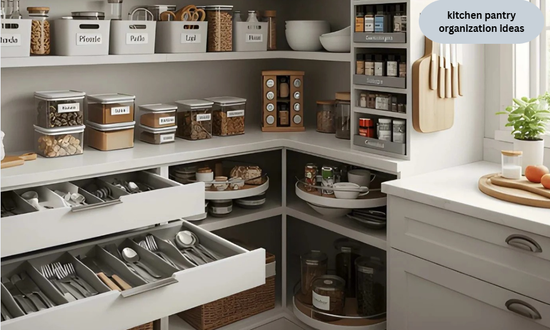
To avoid rearranging the same shelf twice, work in this order.
- Empty every shelf and wipe it clean.
- Check each product. The USDA Food Safety and Inspection Service says in its 2025 dating guidance that a Best if Used By date marks peak quality, not safety. Toss only what shows spoilage or is clearly stale.
- Group items by how you cook: baking, breakfast, snacks, canned goods, and grains. In interior design, grouping by activity is a fundamental practice that reduces the length of each subsequent search.
- Assign a shelf zone to each group and quickly create a map on paper.
- Pour dry goods into clear containers with labels on the front. Pick one container shape and one label style. Inspiration can come from a design designmode search or a store aisle, but matching shapes stack tighter.
- Write the purchase month and year on each can. Shelve new cans behind older ones.
Place heavy and daily items where your hands land first
Store what you grab every day between waist and eye level, and keep heavy bulk items low.
- Eye level: breakfast foods, snacks, and daily cooking basics
- Waist level: baking supplies and canned goods in single rows
- Floor level: flour sacks, rice, and bulk jars
- Top shelf: serving platters and anything you use a few times a year
Lifting a heavy bag from a low shelf is easier than reaching overhead with it.
Give snacks their own bin at eye level. For a viewing party built around the designmode24 biggest sporting event, one grab-and-go bin keeps guests out of the rest of the shelves.
Skip the shelf above the stove. Heat from the oven also reaches nearby inside home cabinets, so store only dry, stable goods there.
Protect food from heat and old stock
Heat shortens how long stored food stays at its best, so keep the pantry cool and rotate older items forward.
The USDA Food Safety and Inspection Service puts high-acid canned goods, such as tomatoes and fruit, at 12 to 18 months on the shelf. Low-acid canned goods, such as vegetables and meat, last 2 to 5 years.
A can of tomatoes bought in January 2026 should be used between January and July 2027. Treat both ranges as quality guides rather than strict expiry dates.
Ohio State University Extension says canned goods stored above 70 degrees Fahrenheit have a shorter shelf life. It also puts whole spices at 2 years and ground spices and dried herbs at one year.
Ground cumin bought in October 2026 is best replaced by October 2027. Buy small jars of ground spices so they don’t outlast their flavor.
Keep the pantry tidy with a short weekly reset
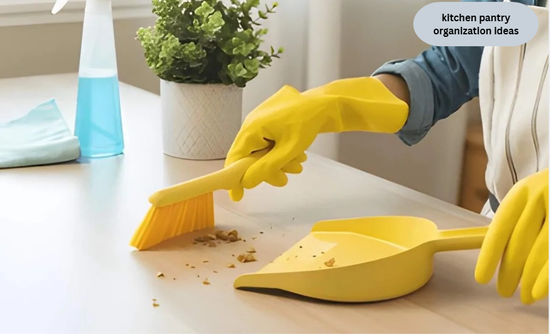
A quick weekly reset keeps the system working long after the first sort.
- Return strays to their zones
- Wipe up spills and crumbs
- Move older items to the front
- Note what is running low
Take one photo of the finished shelves, the way you might save a reference from designmode24 design pages. That picture shows you what a reset should look like.
Write one job for each shelf, such as breakfast or baking. Consider it a brief brief, similar to what a DesignMode24 project may start with.
Steer clear of the errors that ruin a neat pantry.
There is a straightforward solution for each of the four habits that cause most pantry setups to fail.
- Buying containers before measuring. Sketch the shelves first, and keep inspiration photos from a source such as www.designmode24 or a shop display beside your measurements.
- Pouring everything out of its box. Photograph the cooking directions and date, or tape the cut label inside the lid.
- Packing shelves to the edge. Leave visible gaps so you can see the back row.
- Using the hottest spot. Move food to a cool, dry shelf away from the stove and sink.
The typical procedure is modified for a rental without a pantry door, a shallow closet, or a weirdly shaped alcove. Before you build anything, get a carpenter’s quote or contact designmode or another design service. Use door racks and one tall freestanding unit there.
Questions people ask before they sort a pantry
How do you organize a deep shelf pantry?
Returns.Use sliding drawers, rotating trays, or transparent containers that pull out like trays. Deep shelves hide food in the back, so anything that pushes the back row forward works. Keep one product type per bin and label the front, and you’ll see everything at a glance.
How long do canned goods last in a pantry?
High-acid canned goods, like tomatoes and fruit, keep their best quality for 12 to 18 months. Low-acid foods, like canned vegetables and meat, last for 2 to 5 years. Store cans in a cool, dry spot and mark the purchase month so you can use older ones first.
Should I move everything into containers?
No, only dry goods you pour or scoop, like flour, rice, and cereal, gain from containers. Cans and sealed boxes are already stackable, and their packaging holds the dates and cooking directions. If you decant, copy that information onto the label so nothing gets lost.
What should I do if I have no pantry?
Turn one tall cabinet into your pantry, or buy a narrow freestanding unit and place it near the cooking area. Group food by use, keep daily items at eye level, and use door racks for small jars. A single zone map on paper keeps the cabinet from refilling with clutter.
Your pantry plan in short, and what to do today
Good kitchen pantry organization ideas come down to three moves: empty and sort, group by how you cook, and give every group a labeled home. Keep daily items at eye level, heavy items low, and everything away from heat. Do that, and a weekly reset keeps the shelves neat.
- Empty one shelf today and check every date on it.
- Measure that shelf’s width, depth, and height, and save the numbers on your phone.
- Mark the purchase month and year on each can before it goes back.