
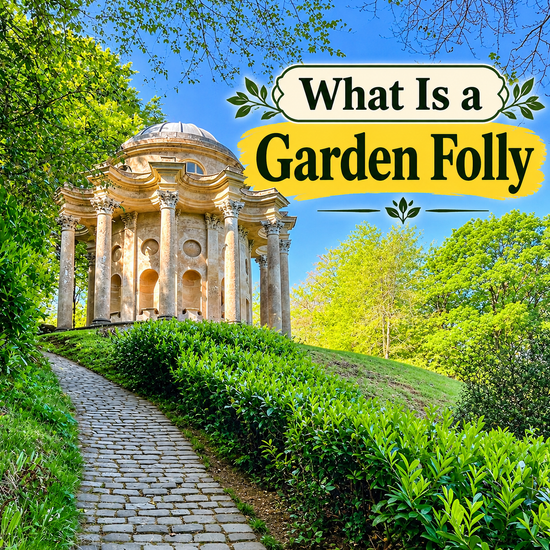
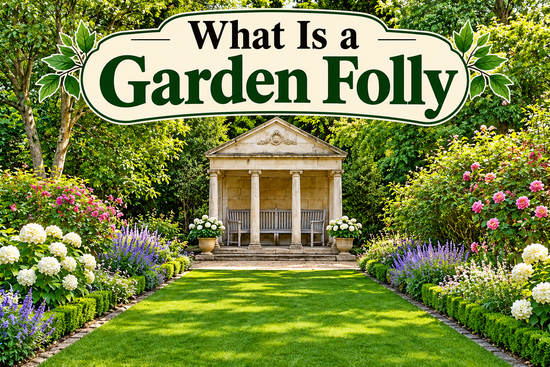
What is a garden folly? It is a decorative outdoor structure built for charm and atmosphere, not for shelter or storage. Think of a tower, mock ruin, grotto, or small temple that anchors a view and rewards anyone who walks toward it.
Key Takeaways
- A folly exists to be seen, which separates it from a shed, workshop, or storage hut.
- The seven strongest forms are the temple, mock ruin, tower, grotto, arch, obelisk, and hermitage hut.
- A handy rule of thumb: start with a height of about one-eighth of the viewing distance.
- Dark evergreens behind pale stone give a folly instant depth.
- Local codes decide whether a footprint needs a permit, so check before pouring a foundation.
What Is a Garden Folly?
A garden folly is a purely ornamental building, often styled as a ruin, temple, or tower. Its only job is to be admired.
Think of it as furniture for the eye. Interior designmode uses a focal wall to organize a room, and a folly gives a lawn the same organizing point.
Where Did Garden Follies Come From?
They began on large European estates. Owners commissioned ruins, temples, and towers to frame views of their land.
The word comes from the French folie, and English estates built these structures most eagerly across the eighteenth and nineteenth centuries.
You need no estate to borrow the idea. A folly visible from the kitchen window makes the garden feel like part of the home.
What Are the Best Garden Folly Design Ideas?
Seven forms have lasted because each solves a different layout problem. Match the form to your lot, not to a trend.
1. Classical Temple
An open rotunda about 8 feet across creates a calm focal point. Plant two tall cypress trees behind it for contrast.
2. Mock Ruin Wall
A broken arch of reclaimed brick, 6 to 8 feet high, suggests age that never existed. Ivy finishes the effect.
3. Belvedere Tower
A slim tower of 12 to 15 feet adds drama on flat ground. On compact lots it works like a tall bookcase in a small living room, pulling the eye up instead of across.
4. Grotto
A shaded stone niche with ferns and shells cools a corner. Pale stone is the same brightening trick used in many small bathroom ideas, and it keeps a tight grotto from feeling like a cave.
5. Garden Arch
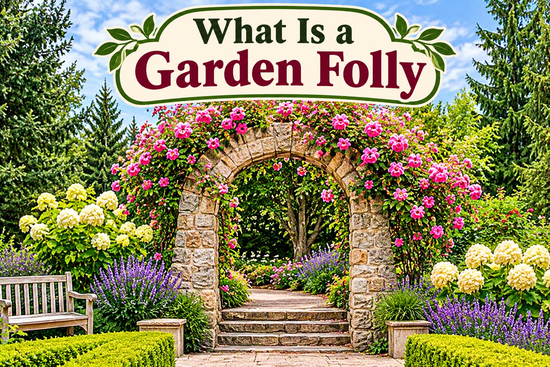
A stone or iron gateway frames a path. It also marks the shift between garden rooms.
6. Obelisk
A tapered column 5 to 7 feet tall fits a narrow bed. Shrink it to 3 feet in a planter and it suits apartment living decor on a balcony.
7. Hermitage Hut
A rustic cabin of timber and shingle invites a quiet sit. A pegboard inside, a trick borrowed from kitchen organization ideas, hides tools without spoiling the look.
How Do You Plant Around a Garden Folly?
Planting turns a stone shape into a scene. Choose plants that suit the folly’s mood.
- Orange marigolds and magenta zinnias, both staples among mexican flowers, glow against aged stucco.
- For a Spanish courtyard mood, build the planting on hispanic flowers such as potted geraniums and climbing roses.
- Use ivy and climbing hydrangea to soften a mock ruin.
- Add ferns and moss at the base of a grotto.
- Repeat two or three plants only, so the folly stays the star.
In freezing zones, a glass conservatory folly shelters tender pots. Goldfish plant varieties thrive in its bright, humid air.
How Do You Choose the Right Spot and Size?
Place the folly at the end of a deliberate sightline, then size it by distance. Divide the viewing distance by 8 to get a starting height.
From a patio 48 feet away, the rule gives 6 feet. At 80 feet, it gives 10.
Test the numbers before you order stone:
- Drive stakes at the corners and run strings to mark the footprint.
- Stand where you sit most and check the view in morning and evening light.
- Prop a 6-foot pole at the spot and step back until it looks right.
- Sketch to scale with layout planners such as designmode24 tools.
- Collect proportion references from designmode24 design galleries.
Treat the lawn like a room. An interior design plan starts with the focal wall, and your yard should start with the folly.
Leave 10 feet of open lawn around the base. Guests at a party need room to gather, and a crowded base ruins the view.
Folly Ideas for Small Yards
You do not need an acre. Scale the idea down and keep one clear focal point.
- Use a 3-foot obelisk in a planter near the patio.
- Build a half-height mock ruin wall along a fence.
- Mount a freestanding stone arch over a narrow path.
- Place a small grotto niche in a shaded corner.
- Choose one folly only, because two compete for attention.
On a tight lot, a folly can double as a privacy screen. It hides a neighbor’s window and still looks intentional.
What Is the Price of a Garden Folly?
Cost tracks footprint and material far more than style. A small stone obelisk costs a fraction of a timber tower.
For a rough budget reference, a 9-foot screened cedar gazebo averages about $8,750 in Fixr’s January 2025 cost guide. Treat that as a ceiling for a temple-style build, then trim it with a smaller footprint or a simpler roof.
| Outdoor feature | Typical US average |
| Pergola | $4,000 |
| Gazebo | $7,600 |
| Patio | $4,000 |
| Fire pit | $850 |
The table’s gazebo average runs lower than the cedar figure because it blends every build, not only screened cedar ones. The two numbers measure different things.
A pergola, patio, and fire pit together reach $8,850, about the price of that cedar gazebo. A folly-centered patio is a fair trade.
Spend like a budget kitchen makeover: put money into surfaces people see and touch, and save on hidden framing. Request itemized quotes for foundation, masonry, and finish.
What Mistakes Ruin a Garden Folly?
Scale and clutter cause most failures, not poor taste. There is an easy cure for every error listed here.
- Floating on an open lawn. Without a backdrop, a folly reads like a shed. Plant a dark hedge or evergreens behind it.
- Clutter at the base. Hoses, bins, and mowers wreck the sightline. Run a decluttering checklist and move everything out of view.
- Glossy finishes. Modern bathroom decorating ideas favor sleek glaze, but a folly wants weathered texture. Choose lime wash or matte stone.
- A crammed interior. Too many chairs and pots turn a hut into a closet. Bathroom organization tips apply here: one hook per item, one shelf per category.
- Copying a photo wholesale. A search for garden folly ideas returns thousands of images, yet your slope and light differ. Borrow one shape, not the whole scene.
When Does the Standard Folly Advice Not Apply?
The one-eighth rule assumes open sightlines. It bends on wooded lots and in tight HOA neighborhoods.
Trust the stake-and-pole test there. Check height caps before you draw anything.
FAQ
Is a garden folly the same as a gazebo?
No. A gazebo shelters people, while a folly exists mainly to be looked at. A gazebo becomes a folly only when its style and placement serve the view more than comfort.
Does building a garden folly require a permit?
Often yes, once the footprint passes your town’s size limit, so call the building department first. Limits differ by city, and foundations or wiring trigger review sooner. HOAs add height and style rules on top.
What materials suit a garden folly?
Natural stone, brick, lime-washed stucco, and rot-resistant cedar all age well outdoors. Pick one main material and repeat it in paths or planters. Compare finished projects on designmode24.com to judge color and texture.
How tall should a garden folly be?
Aim for about one-eighth of the distance between your main viewing spot and the folly. At 40 feet, that means 5 feet. Confirm the height with stakes and a pole before ordering materials.
Who can help me plan a garden folly?
A licensed landscape architect or structural engineer can handle drawings, foundations, and code questions. Design sites supply ideas, and you can contact designmode24 for general inspiration. A local pro should still approve any foundation.
Conclusion
What is a garden folly It is a deliberate, beautiful structure that gives your eye a destination. Choose one of the seven forms, size it to your viewing distance, and back it with dark planting for a result that feels permanent.