

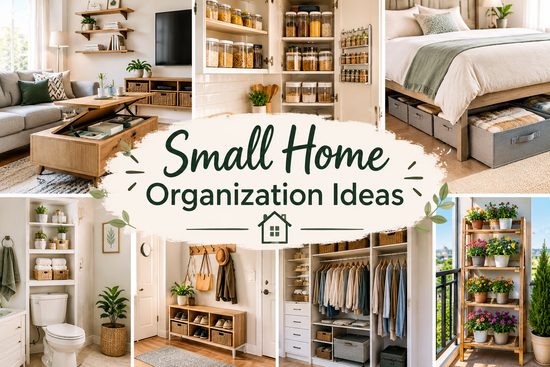
Small home organization ideas work best when they add storage upward and inward instead of outward: wall shelves, over-door racks, under-bed bins, and shallow cabinets. Edit what you own first, then assign each category one zone, so nothing lives on the floor.
Key Takeaways
- Vertical storage adds shelf surface without consuming any floor area.
- Sorting before shopping stops you from paying to contain items you never use.
- One category per zone lets you find any item in under a minute.
- A 12-inch-deep shelf adds one square foot of storage for every foot of wall it covers.
- Spaces behind doors, under beds, and between wall studs hold more than most people expect.
What Is a Small Home Organization?
Small home organization is the practice of giving every belonging a fixed, reachable place so a compact floor plan stays usable.
Tidying shuffles clutter around. Organizing decides which shelf, hook, or drawer each item calls home, and it measures that space before anything gets bought.
How Much Space Do You Actually Have in a Small Home?
Less than the floor plan suggests, because door arcs, vents, and furniture clearances consume the usable area.
Newly built US apartments averaged 910 square feet in 2025, according to RentCafe’s May 2026 analysis of Yardi Matrix data. Studios fall far below that mark, as the table shows.
| Unit type | Average new-build size (sq ft) | Source |
| Studio | 460 | RentCafe, 2025 apartment size analysis |
| One-bedroom | 735 | RentCafe, 2025 apartment size analysis |
| Two-bedroom | 1,095 | RentCafe, 2025 apartment size analysis |
| Three-bedroom | 1,355 | RentCafe, 2025 apartment size analysis |
Those figures cover new buildings, so older units often differ. Measure your own. Clear every surface, as most interior designmode checklists advise, then mark each wall segment wider than 36 inches that no door or window interrupts.
Sample floor plans, including those at designmode24.com, help you picture clearances before you move a single box.
How Do You Organize a Small Home Step by Step?
Buy containers last, zone second, and sort first.
- Empty one zone at a time. Pull everything out of one closet, drawer bank, or shelf, and finish within an hour. Whole-house purges rarely finish.
- Sort into four piles: keep here, keep elsewhere, donate, discard. Anything unused for 12 months leaves, unless it is seasonal or sentimental.
- Assign one category to one zone. Batteries, chargers, and bulbs share a single drawer instead of scattering across three.
- Draw the space to scale. Sketch each wall on graph paper the way a designmode24 design plan begins, and note every shelf depth.
- Buy containers last. Choose bins one inch shallower than the shelf so they slide without scraping.
The most common mistake is buying bins before sorting. Shopping feels like progress, so people haul home fourteen matching containers and discover they hold the same unsorted pile. Count items per category first, then buy only what that count demands, which is the order any sound design designmode workflow follows.
Interior design logic also runs heavy-low and light-high: cast-iron pans sit at waist height, and holiday linens ride the top shelf.
What Are the Best Small Home Organization Ideas for Each Room?
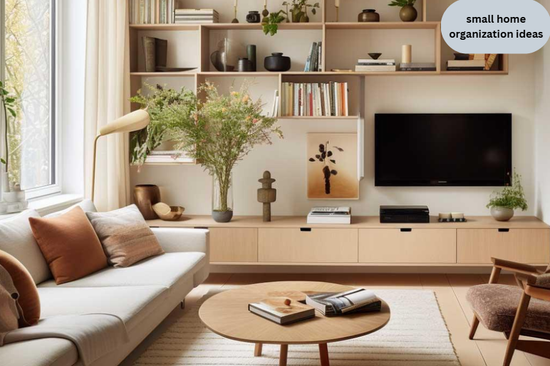
Go vertical everywhere: walls, doors, and the gap under furniture hold what the floor cannot.
Living Room
Choose furniture that stores things: lift-top coffee tables, hollow ottomans, and wall-hung media shelves.
A small living room gains the most from a lidded bench and a 15-inch-deep console behind the sofa, which swallow blankets, controllers, and board games.
Hosting a designmode24 sporting event watch party for ten? Park a lidded basket beneath the console, and the coffee table clears for snacks in thirty seconds.
Kitchen

Hang tools, shelve dry goods, and use cabinet risers to turn one layer of storage into two.
Between the studs inside home walls, a recessed niche about 3.5 inches deep holds spice jars. Check for wiring and plumbing first.
Paint the back of open shelves a pale BM white so the contents read as calm instead of busy.
Bedroom

Use the dead zone under the bed: flat bins slide in wherever 12 inches of clearance already exists.
If a master suite floor plan includes a walk-in closet, install two hanging rods, one near 40 inches and one near 80, to double the hanging capacity.
A narrow window-ledge planter of hispanic flowers, such as marigolds, adds color without claiming a nightstand.
Bathroom
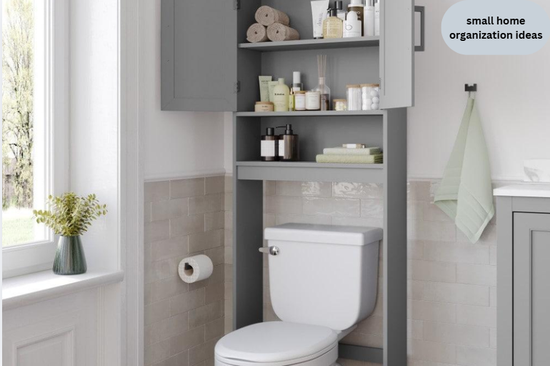
Mount storage on the wall behind the door and above the toilet.
Bathroom organization tips usually start with vertical gaps: an over-the-toilet cabinet, a tension pole with shelves, and a hook strip for towels.
Entry and Balcony

Hooks, a shallow shoe rack, and a tiered stand keep both zones off the floor.
Narrow cypress trees prove the principle outdoors: height uses almost no ground, and a tower of shelves does the same indoors.
A three-tier stand holds six small pots of mexican flowers, such as zinnias, in about two square feet of floor.
Is Wall Storage Cheaper Than Renting a Storage Unit?

Usually, yes, because shelving is a one-time cost and a unit bill every month.
Run the numbers on a 10-foot wall. Five shelves, each 12 inches deep, give you 50 square feet of shelf surface, the same area as a 5-by-10 unit.
SpareFoot reported an average asking rent of $96.44 per month across all self-storage unit sizes in the fourth quarter of 2025. Over twelve months, that totals $1,157. The average blends every unit size, so a 5-by-10 in your city can price higher or lower, and a local quote settles it.
Any shelving system priced under $1,157 repays itself inside a year.
Install with a basic kit: tape measure, level, and stud finder, the designmode24 tools any weekend project needs.
Wall systems fail in three situations. Renters with no-drill clauses, ceilings under 8 feet, and homes with load-bearing walls where you cannot cut niches should rely on freestanding shelves and over-door racks instead. If a layout still refuses to work, contact DesignMode24 or a local designer with your scaled sketch in hand.
FAQ
How do I organize a small house with no storage?
Start with vertical space: wall shelves, over-door racks, and under-bed bins. Then assign each category a single zone and label it. Furniture with hidden compartments fills the remaining gaps.
How should a small flat be set up?
Sort first, then match each category to a measured shelf, hook, or bin. Apartments with strict lease rules favor freestanding shelves and over-door racks. Measure the empty space before you shop.
Without drilling, how can I add storage?
Use freestanding shelves, tension rods, over-door hooks, and adhesive hooks rated above the item’s weight. Load the lowest shelves first so the unit stays stable. Heavy items belong near the floor.
How full should a small closet be?
Full enough that every hanger moves freely and no garment presses against another. A packed rod wrinkles clothes and hides what you own. Rotate off-season pieces into a bin under the bed.
Does organizing a small home save money?
Yes, because owned storage replaces rented units and stops repeat purchases of items you cannot find. Compare the cost of shelving against twelve months of unit rent before you decide.
Conclusion
Small home organization ideas succeed when you measure first, store vertically, and give every category one home. A 10-foot wall of 12-inch shelves matches the floor area of a 5-by-10 unit and carries no monthly bill. Pick one zone this weekend and build the system from there.