

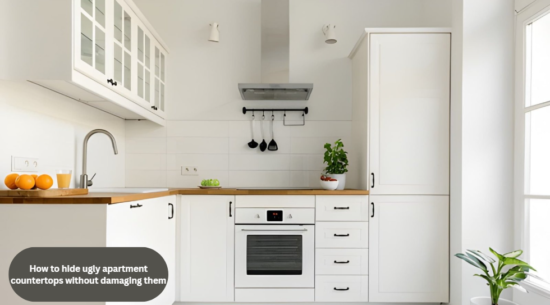
How to hide ugly apartment countertops without damaging them comes down to one rule: cover the surface with something that sits on top and lifts off cleanly. Peel-and-stick film, loose wood slabs, boards, and trays all qualify, while paint, glue, and screws do not. A cover also hides stains, burns, and dated patterns in one move, with no repair bill.
One condition changes the answer most: whether your counter surface is smooth. Kittrich, the maker of Con-Tact liner, tells installers to start with a dry, clean, smooth surface.
The end result is a counter that looks refreshed and comes off clean at move-out, for the price of one 16-foot roll of film and a trivet.
Consider ways to conceal unsightly apartment countertops without causing any harm.
Plan around two checks: what your lease says and what the counter looks like today.
Loose covers sit on top, so they raise fewer lease questions than adhesive film. If the lease bans adhesives or alterations, confirm with your landlord before you buy film.
Photograph every burn, scratch, and stain in daylight before you cover anything. Those images are your record of the starting condition.
According to Harvard University’s Joint Center for Housing Studies, the median U.S.rental unit was 45 years old in 2023, up from 36 in 2003.
Older buildings mean older counters. A tired surface is often the building’s age, not your doing.
In 2025, the Massachusetts Supreme Judicial Court ruled that landlords can’t use a deposit to cover reasonable wear and tear, such as repainting.
Rules differ by state, and damage beyond ordinary use, like burns and deep cuts, can still be charged.
Snap one straight-on photo and use any design tools tech you like to test colors on it before you buy.
Then gather color ideas, for example with a design designmode search, and save the two shots that suit your cabinets.
Pick the cover that fits your counter, budget, and skill level
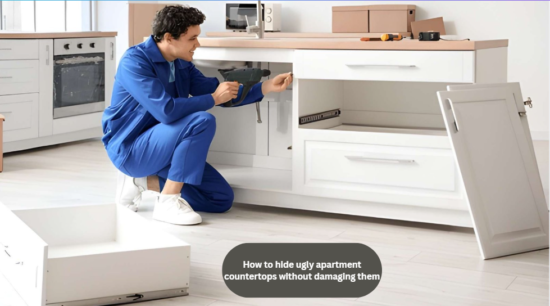
Match the cover to your surface first: film suits smooth counters, and loose pieces suit everything else.
- Peel-and-stick film covers the whole surface.
- A wood slab sized to the run hides texture and stains.
- Oversized cutting boards cover burns one patch at a time.
- Trays gather oils and soap over worn spots.
- A silicone mat protects the spot you use most.
- A rolling cart adds a fresh work surface.
- A stand mixer or air fryer parked on the worst stain costs nothing.
Four common situations point to different picks:
- Smooth counter, long lease: film.
- Grooved or cracked surface: slab or boards.
- Landlords ban adhesives: boards, trays, or a cart.
- Moving soon: appliances, trays, and a mat, since there is nothing to peel.
When you search designmode24 design for color ideas, match the cover to your cabinets, not to the old counter.
Ask a friend or a store clerk for a second opinion on color, and contact designmode if you want a third.
Apply peel-and-stick film in two clean strips
Film goes on best as flat strips, starting from a clean, dry surface.
- Wash the counter with mild soap and dry it fully.
- Stick a small test piece in a back corner, peel it off, and check that the surface looks unchanged.
- Cut each strip with about 1/8 inch of extra film on every edge, because film can shrink over time.
- Peel the backing from one corner and smooth the film from the center outward to push out air.
- Lay the second strip edge to edge with the first, seam toward the back wall.
Kittrich sells Con-Tact rolls that are 18 inches wide and 16 feet long. Assume your run is 25 inches deep and 6 feet long.
Two 6-foot strips side by side cover 36 inches of depth. That uses 12 feet of film and leaves 4 feet for a patch.
Borrow kitchen layout ideas for the seam: run it toward the back wall, where a toaster or canister can sit over it.
Protect the surface from heat and daily wear
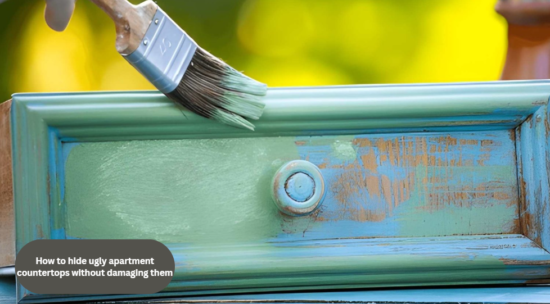
Put a trivet under every hot pot and pan, whatever cover you choose.
Wilsonart, a laminate maker, says a maintained temperature of 285°F can discolor laminate. It adds that a hot dry pan should never sit directly on it, because the pan’s temperature is unknown.
Therefore, a pan left to sit rather than a quick set-down poses .A loose cover is required for counters with grooves or cracks, and your lease still exceeds any interior design preference.
A care guide from the same maker adds that electric skillets and similar appliances need a trivet too.
Cambria says its quartz may not withstand direct heat from pots and pans, and recommends a closed-weave hot pad or a solid trivet such as a breadboard. Heat resistant on a label does not mean heat proof.
Planning a party around the designmode24 biggest sporting event means more hot dishes, so set out two or three trivets before guests arrive.
Kitchen organization ideas help here too: keep a trivet in the drawer next to the stove so it’s always within reach.
Remove the cover cleanly before move-out
Peel film off in small pieces, warming stubborn spots first with a hair dryer on low heat.
If sticky residue stays, wipe on a citrus-based solvent and let it sit about 5 minutes. Scrub with a sponge, then rinse with clean water.
Because laminate manufacturers caution that acidic or abrasive cleaners can harm the surface, test the solvent first on a hidden corner.
Photograph the clean counter from the same angle as your first photos.
Keep the spare strip inside home, rolled up in a closet, until the cleanup is done, in case a torn edge needs a patch.
The same cleanup rule applies to decorate a rental apartment without damage anywhere else: use only what comes off clean, and test it first.
Fix the mistakes that cost renters the most
Most renter countertop problems start with skipped prep or hot cookware, and each has a quick fix.
- Film on a dusty or greasy counter: wash with mild soap and dry fully before the first strip.
- Hot pans set straight on the cover: keep a trivet beside the stove.
- Film trimmed flush to the edge: leave the extra 1/8 inch, since film can shrink.
- No starting photos: take dated shots, and store them with the lease and any pages you saved, such as .www.designmode24.
- Film over lifting laminate: it can pull the loose edge up when removed, so choose a slab instead.
When the counter is cracked or grooved, or the lease bans adhesives, skip film and use boards, a slab, or a cart. Color notes, whether from a friend or DesignMode24, can still guide the choice.
Counter questions renters ask before they stick anything down
Can I cover my rental countertop with contact paper?
Yes, if your lease allows adhesives and the counter is smooth. The counter film is designed to peel off in fragments, and any residue is removed using low heat and a citrus-based solvent.. Test a small piece in a back corner first, and photograph the counter before you begin.
How do I cover a countertop without sticking anything to it?
Lay boards, a loose wood slab, trays, or a silicone mat on top of the surface. Nothing bonds, so nothing needs removing at move-out. A rolling cart adds workspace if the old counter is too worn to use. Loose covers can still scorch, so keep a trivet under hot cookware.
Can my landlord charge me for covering the countertop?
A cover that comes off cleanly generally isn’t treated as damage, but burns, cuts, and leftover residue can be charged. Deposit rules vary by state, so read yours and the lease. Dated photos from before and after give you the strongest record if a dispute starts.
How hot can a laminate countertop get before it’s damaged?
Laminate can discolor when it is held at about 285°F, so put a trivet under every hot pan. A brief splash of boiling water is a different case from a hot dry pan left to sit, because the pan’s temperature is unknown and the heat stays in one place.
Hide the counter, keep the deposit: your short answer and first moves
How to hide ugly apartment countertops without damaging them comes down to covers that sit on top: smooth counters take peel-and-stick film, while rough or off-limits surfaces take boards, slabs, and trays. Protect every cover with a trivet and photograph the counter before and after. Remove film slowly with low heat so the original surface stays as you found it.
- Photograph the counter today and read your lease for any adhesive rules.
- Measure the run and test one small piece of film in a back corner.
- Put a trivet beside the stove before you do anything else.
