
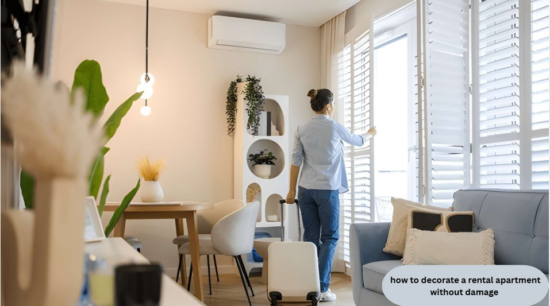
Here is how to decorate a rental apartment without damage: swap nails, paint, and fixtures for adhesive strips, freestanding pieces, plug-in lighting, and textiles. Each swap changes how a room looks and feels. Each can come off at move-out when you use it as directed. Start with lighting, rugs, and wall art, since each covers a lot of visible space.
The one condition that changes the answer is your lease, because it decides what counts as damage. Read the clauses on nails, paint, and adhesives before any interior design shopping. Some leases allow small nail holes, and others ban even adhesive strips.
Pick the Right Fix by Situation
Most renters need one of five fixes.
| Your situation | Short answer |
| Heavy mirror or large frame | Use large adhesive strips within the weight rating, or lean it on the floor |
| Dark room, no overhead light | Add plug-in sconces and warm LED bulbs |
| Bare, echoing floors | Layer a rug over a non-slip pad |
| Cabinets you dislike | Swap the knobs and keep the originals |
| Almost no budget | Rearrange furniture and borrow art from another room |
How to Decorate a Rental Apartment Without Damage: 15 Ideas That Come Off Clean
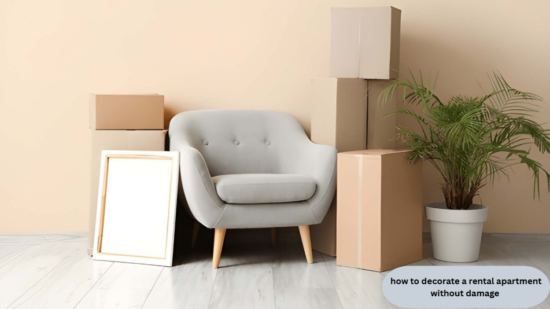
Fifteen removable swaps cover walls, light, floors, and storage without a drill.
Most apartment living room decor ideas start with these six moves:
- Large adhesive strips for frames and mirrors
- Art leaned on a ledge or shelf
- Removable wallpaper on one accent wall
- Plug-in sconces hung on removable hooks
- Warm LED bulbs in lamps you already own
- Layered rugs over non-slip pads
Four more suit the bedroom and hallway:
- Tension-rod curtains
- Pillow covers and a throw in one color family
- A tapestry hung with strips
- Low freestanding shelves and woven baskets
The kitchen ideas below touch only what you can lift out or peel off:
- Shelf liners in a bold pattern
- New cabinet knobs, with the originals saved in a labeled bag
- A tension rod under the sink
- Over-the-door hooks for towels and tools
- Herbs in pots on the windowsill
Test wallpaper and strips on a hidden patch before you commit a whole wall.
Compare the Fixes by Risk and Holding Power
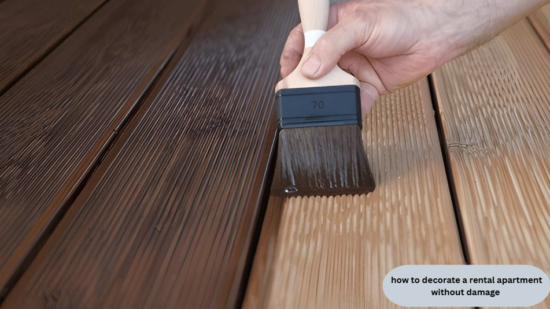
Textiles and freestanding pieces carry the least risk, adhesives sit in the middle, and drilled hardware carries the most.
| Fix | Risk to walls | Holding limit | Best use |
| Rugs, throws, freestanding shelves | None | Not wall-mounted | Floors and seating |
| Large adhesive strips | Low on smooth painted walls | 16 lb per four pairs | Frames and mirrors |
| Removable wallpaper | Depends on the paint underneath | Not applicable | One accent wall |
| Nails or screws | Highest, needs approval | Varies by anchor | Heavy shelving, with permission |
3M rates four pairs of its large Command strips at 16 pounds on painted walls, tile, glass, and other smooth surfaces.
That covers a frame, not a heavy mirror. A 20-pound mirror stays on the floor, leaned against the wall.
Textiles do the most work inside home spaces where paint is off the table, and they put no weight on the wall.
Light is the cheapest change. ENERGY STAR says certified bulbs use 70 to 90 percent less energy than incandescents and last up to 25 times longer. Pack the bulbs when you leave.
Free floor-plan apps and other design tools tech let you test a rug or shelf size before you buy.
Choose Your Fixes by Budget, Space, Skill, and Timeline
Match each fix to your tightest limit: money, space, skill, or time.
- Tight budget: Rearrange furniture, swap in warm bulbs, and move art between rooms. These cost little or nothing.
- Small space: Build up, not out, with strips, over-door hooks, and tension rods. Floor pieces eat the room.
- Little DIY skill: Stick to rugs, pillow covers, and curtains on tension rods. None needs a tool.
- Short stay: Skip wallpaper. Removal ads work on the way out.designmode 24 biggest sporting event or any big game night, use poufs, floor cushions, and a folding console in
- Hosting changes the plan too. For a watch party built around the place of anything fixed.
A search such as design designmode returns plenty of room photos. Check each one for built-ins and drilled shelves before you copy the look.
Count the Real Cost: Your Deposit and Your Paper Trail
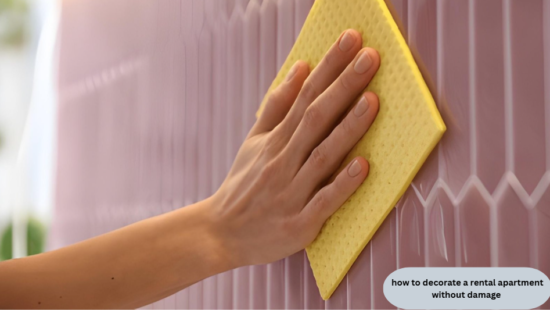
The real cost of a mistake is your deposit, so spend first on the fixes that protect it.
Harvard’s Joint Center for Housing Studies found that 22.7 million renter households, about 49 percent, were cost-burdened in 2024. That means they spent over 30 percent of income on housing costs.
With that little slack, a lost deposit hurts.
The San Francisco Rent Board reports that California caps deposits at one month’s rent for most landlords on deposits collected since July 1, 2024. Certain small owners can still ask for two months. This is a California rule, so check your state. At $2,000 rent, the cap means up to $2,000 is at stake.
For California tenancies that begin on or after July 1, 2025, landlords must also photograph the unit before move-in, according to the California Apartment Association. Ask for those photos and take your own.
Inspiration searches such as designmode24 design cost nothing, so put the budget into strips, bulbs, and textiles.
A site like www.design can show finished rooms, but price every item yourself before buying.
When Removable Fixes Won’t Work
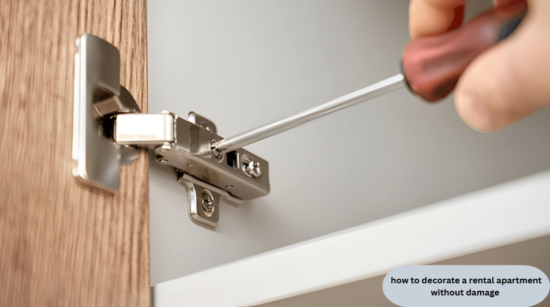
Skip adhesive fixes when your lease bans them or your wall surface can’t hold them.
3M lists painted walls, tile, glass, and other smooth surfaces for its strips, so rough brick and textured plaster are a poor match. Lean art on a ledge or use a freestanding rack instead.
Advice from any outlet, DesignMode24 included, gives way to what your lease says.
If the lease bans adhesives and you want a full layout, contact designmode or any other studio, and bring photos plus the clause.
If your landlord approves nails, get that approval by email before you pick up a hammer.
Questions Renters Ask Before They Hang Anything
Can I paint my rental apartment?
Only if your landlord or lease allows it in writing. Some landlords require you to restore the original color before you leave, which adds cost and work. Ask by email, save the reply, and confirm any color you must return to before buying a single can.
Do Command strips damage walls?
They can if you use them on the wrong surface or pull them off the wrong way. Follow the product’s stretch-to-remove directions, and test one strip somewhere hidden first. Peeling or weak paint may lift with the strip, so check the wall before you commit to a gallery.
How can a heavy mirror be hung without nails?
Lean it against the wall on a rug or low console instead of hanging it. If you do use strips, stay within the weight rating printed on the package. Anything above that rating belongs on the floor, with felt pads under the base to protect the surface.
What should I photograph before decorating a rental?
Photograph every wall, floor, and fixture, with the date visible, before you hang anything. Email the set to your landlord and keep a copy. If a dispute starts at move-out, that record shows what was already marked when you arrived.
Start With Your Lease, Your Lights, and Your Photos
Knowing how to decorate a rental apartment without damage comes down to three habits: read the lease, choose removable fixes, and document the room. Adhesive strips, plug-in lighting, rugs, and textiles do most of the visual work. Match each one to your lease, your budget, and your timeline.
- Reread your lease and email your landlord about nails, paint, and adhesives.
- Photograph every wall and floor with the date visible.
- Buy strips, warm LED bulbs, and one rug, then test one strip on a hidden spot.
I

Pingback: Small Living Room Decorating Ideas That Make Any Space Feel Bigger
Pingback: Peel and Stick Backsplash Ideas: 15 Renter-Friendly Ways to Upgrade Your Kitchen
Pingback: Peel and Stick Wallpaper Ideas: 15 Stylish Ways to Refresh Any Room