

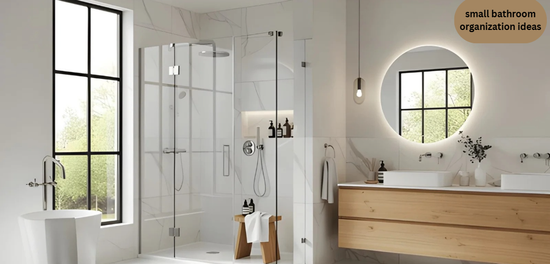
Small bathroom organization ideas work best when you store items by how often you use them and move storage up the walls instead of across the floor. Start by emptying the room and sorting every item. Then add shelves, hooks, and drawer dividers sized to the space you measured. Keep daily items within arm’s reach and everything else behind a door.
Moisture changes the answer more than size does. Humidity gathers inside home bathrooms with no window, so storage has to tolerate damp air and dry out fast. Open shelves and wall hooks suit those rooms better than closed boxes.
You will end with fifteen defined storage spots after one afternoon of work, and most steps need no purchase.
Empty every surface and sort what stays
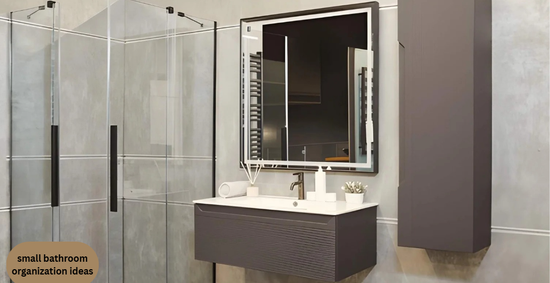
Start by emptying the room one surface at a time, because you can’t plan storage for items you haven’t counted.
How to deep clean and refresh a 1400 sq ft house is a bigger project, but the first move is the same: clear, wipe, and put back only what earns its place.
- Empty the counter, then the vanity, then the shower.
- Toss anything expired, leaking, or no longer used.
- Move medicine out. The Food and Drug Administration advises a cool, dry spot, and a steamy bathroom is the opposite. A bedroom drawer works.
- Sort the rest into daily, weekly, and rarely used.
- Wipe each shelf and let it dry before you refill it.
Most bathroom organization tips start with buying bins, but a sorted pile shows how many you actually need.
Measure the room before you shop
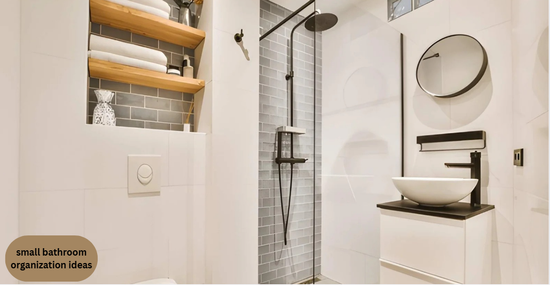
Measure every wall, door swing, and open floor path first, because clearance limits what fits.
The National Kitchen and Bath Association recommends 30 inches of clear space in front of the toilet, sink, and shower. Building code allows as little as 21 inches in front of the toilet and sink.
A rolling cart that takes nine inches from a 30-inch gap leaves 21, which is the code floor. In a small room, floor storage usually costs more space than it gives.
Bathroom layout ideas only help when the numbers hold, so check each one against your own clearances. NKBA also suggests at least 18 inches from the toilet center to the nearest side wall or fixture, where code requires 15. Don’t let a shelf or cabinet narrow that gap.
Write a title on your sketch, such as design designmode, and list every wall width beneath it.
Mount storage on the walls and the door
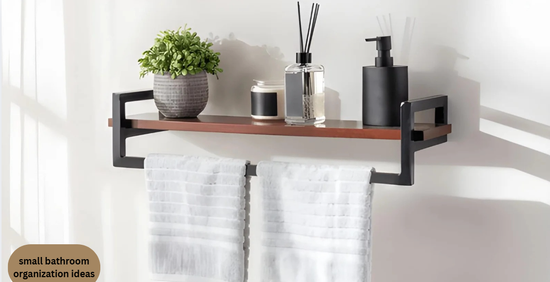
Walls and doors add storage without using floor space, so fill them before anything else.
- Floating shelf above the toilet for spare rolls and folded towels
- Over-the-door hooks for robes and bath towels
- Wall-mounted toothbrush holder at hand height
- A magnetic strip for tweezers and clippers inside a cabinet door
- Pocket rack on the back of the door for hair tools
- Corner shower shelf for bottles
- Wall-mounted towel bar beside the vanity
- Basket on a shelf holding rolled hand towels
Test shelf heights in a free room planner or other design tools tech before you drill, so the top shelf clears your head and the door swings.
A photo from any source, including interior designmode24, shows a styled shelf but not its depth. Check the depth against your own wall.
Pick small bathroom organization ideas by zone
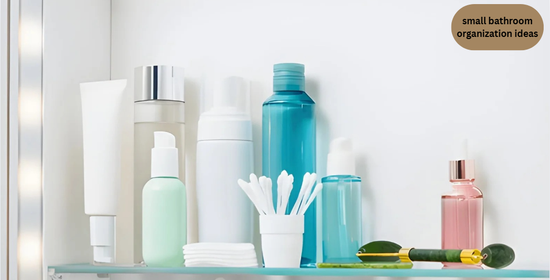
Give every item one zone, then choose the container that fits that zone.
- Drawer dividers for daily grooming tools
- Stacked bins around the plumbing under the sink
- Tiered tray on the counter for the five items you touch each morning
- Refillable pump bottles in place of bulky packaging
- Slim rolling cart, only if the 30-inch gap stays open
- Recessed mirror cabinet, used for toiletries rather than medicine
- Small jars for cotton rounds and swabs
Store daily items between shoulder and knee height, a simple interior design habit that saves bending.
Think of game day as the designmode24 biggest sporting event for a guest bath: a full house, one sink, no room for clutter. Before guests arrive, clear the counter and leave out one tray, one hand towel, and a spare roll.
Keep the room dry so storage lasts
Dry air protects your belongings and your shelves, so ventilation comes before any new organizer.
Indoor humidity should be kept below 60 percent, preferably between 30 and 50 percent, according to the Environmental Protection Agency. It also says to run the bathroom fan or open a window while you shower. A small humidity meter from a hardware store shows whether your room passes.
After a spill or leak, EPA says drying wet materials within 24 to 48 hours usually prevents mold. Check under-sink bins after any drip and dry them fast.
Hang towels fully open on a bar or hooks instead of folding them damp on a shelf.
The Centers for Disease Control and Prevention says toothbrushes should stand upright so they air-dry. A wall holder with open slots does that better than a lidded cup.
DesignMode24 recommends open, ventilated holders in damp rooms for exactly this reason.
Treat every designmode24 design idea you save as a draft until it passes a moisture and measurement check.
Fix the three habits that waste the most space
Three common beliefs cause most storage failures, and each has a simple fix.
- Myth: the medicine cabinet is the right home for medicine. Evidence: the FDA says heat and moisture can make pills less potent. Fix: use the mirror cabinet for toiletries and keep medicine in a dry drawer.
- Myth: a toothbrush cover keeps germs out. Evidence: the CDC says brushes should stay uncovered until dry. Fix: use an open holder with space between brushes.
- Myth: more organizers mean more order. Evidence: floor bins shrink the walking gap you measured earlier. Fix: measure first, and keep any page saved from designmode24. com or another site beside your measurements.
If you rent and can’t drill, skip the shelves, magnetic strips, and wall holders. Over-the-door hooks and a tension rod give much of the same reach without a hole.
Questions people ask before they start
How should a very small bathroom be set up?
Store by how often you use things, and move storage onto walls and doors.Rarely used goods should be removed from the room, weekly items should be placed behind a door, and daily items should be kept on a single tray or shelf. This frees the floor and counter, which small bathrooms need most.
Where should I keep medicine if not in the bathroom?
Keep medicine in a cool, dry spot such as a bedroom drawer, closet shelf, or storage box, in its original container. Heat and humidity from showers can weaken pills. If children live in or visit your home, choose a spot with a lock or child latch.
How much floor space should stay open in a small bathroom?
Aim for 30 inches of clear space in front of the toilet, sink, and shower. That figure is a design recommendation, while building code allows 21 inches in many places. Measure from the front edge of each fixture, and keep baskets, carts, and hampers out of that strip.
Should I cover my toothbrush in the bathroom?
No, leave it uncovered and upright so it can dry. Bacteria are more likely to grow on a brush kept in a closed, damp space. If several brushes share a holder, keep their heads from touching.
Start with a tape measure and an empty counter
Small bathroom organization ideas succeed when you measure first, store on walls and doors, and keep moisture low. Sort what you own by how often you use it, and protect a clear walkway in front of each fixture. Do that before you buy a single organizer.
- Take measurements of every wall and the open floor in front of the shower, sink, and toilet.
- Move medicine out and sort what remains into daily, weekly, and rarely used.
- Install one wall-mounted piece, such as hooks or a shelf, and keep the walkway clear.