

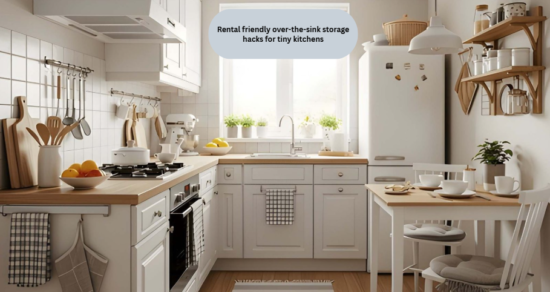
Rental friendly over-the-sink storage hacks for tiny kitchens use tension rods, adhesive hooks, and cabinet-door racks that clamp or stick on and come off clean. A large Command hook from 3M is rated for 5 pounds, which covers light items like a sponge caddy or a dish towel. Nothing needs drilling, so there are no screw holes to patch. Every piece comes off when you move out.
Most kitchen organization ideas assume you can drill. The Census Bureau’s second-quarter 2026 homeownership rate was 65.0 percent, so about 35 percent of households rent. Your lease is the one condition that changes the answer: if it bans adhesive on walls or cabinet faces, use tension rods and clamps.
The result is extra sink-side storage that you can remove at move-out, and a full setup fits in one afternoon.
Measure your sink zone before you buy anything
Measure the counter on both sides of the sink first, because the sink zone is where a tiny kitchen runs out of room fastest.
The National Kitchen & Bath Association calls for at least 24 inches of landing area on one side of the sink and 18 inches on the other. Its guidelines also want 400 inches of shelf and drawer frontage within 72 inches of the sink’s centerline in a kitchen under 150 square feet.
Say your counter run is 60 inches and your sink is 24 inches wide. The remaining 36 inches falls six short of the 42 inches those two landing areas call for.
Every item you move above or inside the sink zone buys back the counter you can’t afford to lose.
Before you pin kitchen layout ideas, sketch your own sink wall to scale.
Design tools tech does not need to be fancy; a phone’s measuring app is enough for a rough sketch. Write down the cabinet door width too, since it caps the size of any door-mounted rack.
Pick rental friendly over-the-sink storage hacks for tiny kitchens that leave walls intact
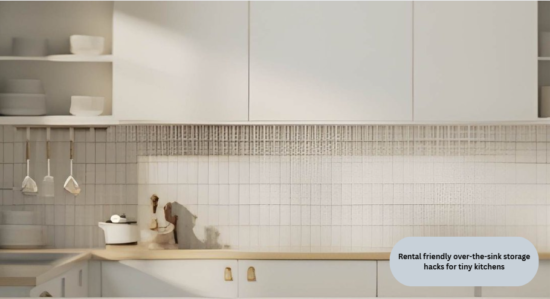
Your lease should pick the fix, because a rack that works on a flat cabinet door fails on a textured one.
| Your lease or cabinet | Start with | Why it works |
| Adhesives are banned | Tension rod under the sink, or a sink-spanning shelf | Spring pressure or the counter edges hold it, so nothing touches the walls |
| Adhesives are fine on tile and paint | Hook rail on water-resistant strips | The strips come off with a slow pull |
| Cabinet doors are flat | Over-the-door rack | It hooks over the top edge and needs no tools |
| Fronts are textured or open | Freestanding shelf | Nothing needs a flat surface to grip |
In interior design, heavy pieces sit low, and the same habit keeps hooks from failing: put the heaviest item lowest and closest to the cabinet frame.
Bookmark one designmode24 design photo of a narrow sink wall and compare its proportions with yours before you choose a rack width.
Mount each piece in five steps
Clean the surface, press the strip on firmly, and give it the wait time printed on the pack before you add any weight.
- Wipe the spot with rubbing alcohol and let it dry.
- Mark the position with painter’s tape and check that it’s level.
- Press the strip or hook against the surface for the time the pack states.
- Wait the stated time before hanging anything.
- After a day, check the hook again and add the heaviest object last.
Renter-friendly ways to hang a heavy gallery wall rest on the same math: spread the load across several rated hooks and never exceed any one hook’s rating.
Photos on designmode24.com or any design site can help you choose hook heights, though your own reach should decide.
Test two myths before you spend a dollar
Two common beliefs about sink-side storage fall apart when you check the label and the agency guidance.
People assume steam makes adhesive hooks slide off. 3M sells Command strips it calls water-resistant and effective in wet, humid and dry conditions, and it markets matching hooks for kitchens. The fix is buying the right strip, not giving up on hooks.
A photo from DesignMode24 or elsewhere can’t show which strip sits behind a hook, so read the pack before you copy a look.
The second belief is that a rack over the sink breeds mold. The Environmental Protection Agency says indoor humidity should stay below 60 percent, ideally between 30 and 50 percent, and that wet spots should be dried within 48 hours. More important than the rack are the leaks and the air.
It also notes that a humidity meter generally costs under $50. Steam inside home kitchens builds while you cook, so check the meter after dinner.
Protect your deposit before move-out day
Photograph the sink wall and cabinet faces before you install anything, and keep the packaging.
Date-stamped photos show the surfaces as they were on day one. A design designmode search can turn up reference layouts to compare, but your own photos are the record that counts.
Command strips are stretch-release, so at move-out you pull the tab slowly instead of prying the hook off the wall.
Before you contact designmode or a landlord with a question, send photos and measurements rather than a description.
Fix the mistakes that cause the most trouble
Most failures come from four mistakes, and each has a quick fix.
- Hanging more than the rating allows. Fix: weigh the item and stay under the printed limit.
- Hanging wet, dripping items on strips. Fix: let them drain in the sink first.
- Pressing strips onto fresh paint or textured walls. Fix: use a tension rod or a clamp there instead.
- Stacking extra pitchers and bowls on a rack for a watch party, say for the designmode24 biggest sporting event. Fix: keep party-only gear in a cabinet until guests arrive.
If your lease bans adhesives, or your cabinet fronts are textured, skip strips entirely. A freestanding sink-spanning shelf and a tension rod still give you storage with nothing attached to the walls.
Questions renters ask about sink-side storage
Can I use over-the-sink storage in a rental without drilling?
Yes, you can add storage over and around a rental sink without drilling. Tension rods, over-the-door racks, adhesive hooks, and sink-spanning shelves all install without screws. Check your lease first, since some landlords limit adhesives on painted surfaces, and stay under each product’s printed weight rating.
What is the maximum weight that an adhesive hook can support over a sink?
A large Command hook is rated for 5 pounds, and the pack states the limit for other sizes. Use the rating on the pack, not a guess, and subtract for wet items, since a damp towel weighs more than a dry one. Choose strips labeled for wet areas near the faucet.
How do I stop mold under a rental sink?
Keep the cabinet dry and keep indoor humidity below 60 percent, ideally between 30 and 50 percent. Fix drips fast, dry any wet spot within 48 hours, and check the air with a humidity meter. Report any leak to your landlord in writing so repairs are on record.
Where should a drying rack go in a tiny kitchen?
Put a sink-spanning rack over the basin so dishes drain straight into the sink. That keeps your counters free for prep. Check that the rack’s feet rest on the counter edges and don’t press against the faucet, and leave room to reach the tap.
Start with one reversible fix this week
Rental friendly over-the-sink storage hacks for tiny kitchens work best when they rely on rods, clamps, or wet-rated adhesive strips and leave your sink landing space clear. Measure first, match every item to a printed rating, and keep humidity below 60 percent. Everything can come off at move-out.
- Measure the counter on both sides of your sink and compare it with 24 and 18 inches.
- Weigh the first item you plan to hang and check it against the pack rating.
- Photograph the sink wall and cabinet fronts before you install anything.
.
