
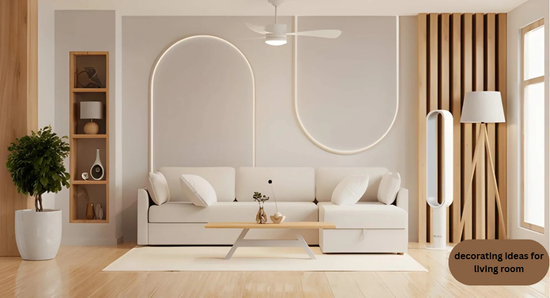
The best decorating ideas for living room spaces start with a fixed layout, a rug sized to the seating, and warm layered light. Paint and accessories come last because they are the cheapest to change. A room built in this order looks planned even when most of the furniture is old. Getting that order right matters more than any single purchase.
The floor area changes the plan the most. Rooms of 11 by 13 feet or smaller suit a 6 by 9 rug, according to rug maker Ruggable, so small living room ideas favor slim furniture and open floor.
You’ll finish with one clear seating zone, warm lamps, and a rug that fits, after one planning session and one setup day, with no new sofa required.
Fix the layout before any decorating ideas for living room shopping
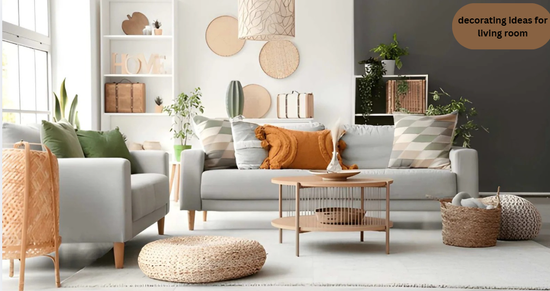
Place the furniture first, because every later choice depends on where people sit and walk.
The online design service Havenly puts the gap between large pieces at 30 to 36 inches, and it allows 24 inches in a small room. Walk around each piece before you keep it.
Most living room layout ideas start from one seating group built around a focal point, such as a window wall or a TV.
- Measure the walls, door swings, and window wall, then sketch the room on paper.
- Set the sofa first, and keep the gap above between it and every other large piece.
- Place the coffee table 12 to 18 inches from the sofa, the range Wayfair recommends, with 30 inches between the table and a TV stand.
- Add chairs last and angle them toward the sofa.
Then picture your busiest night, such as a game-day watch party for the designmode24 biggest sporting event, and check that every guest has a seat and a clear path.
Size the rug so the seating sits on it
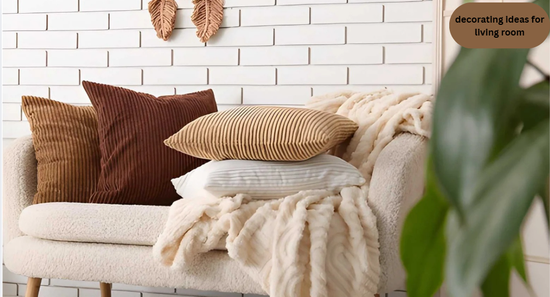
Choose a rug big enough that at least the front legs of the sofa and chairs rest on it.
Placement, according to rug supplier Revival Rugs, makes a seating group read as a single entity. In a compact room, it is enough on its own.
Ruggable says an 8 by 10 rug fits a room of about 11 by 13 feet, with 12 to 18 inches of bare floor around it.
In a 12 by 14 foot room, a centered 8 by 10 rug leaves 2 feet of bare floor on every side, a little more than that range.
The footprint of a rug is displayed before you purchase it using phone room planners and other design tools.Painter’s tape on the floor works just as well.
Keep every measurement in one phone note, named something plain like design designmode, and take it to the store.
Layer warm light from more than one height
Use two or more lamps at different heights with warm bulbs, and treat the ceiling light as backup.
ENERGY STAR says most of its certified bulbs match the glow of old incandescents at 2200 to 3000 Kelvin, while 3500 to 4100 Kelvin looks whiter. For evening seating, stay at the lower end of that scale.
Warm bulbs set a calm tone for the inside home once the sun goes down.
The Federal Trade Commission notes that a 60-watt incandescent gives about 800 lumens, and an LED with the same 800 lumens uses about 9 watts. That is 51 watts less per bulb, an 85 percent cut.
So swap bulbs lamp by lamp, and match lumens on the Lighting Facts label instead of watts.
Add lamp shades and bulbs to your home maintenance checklists for early spring, so dust doesn’t dim the glow.
Choose a calm base color, then repeat it
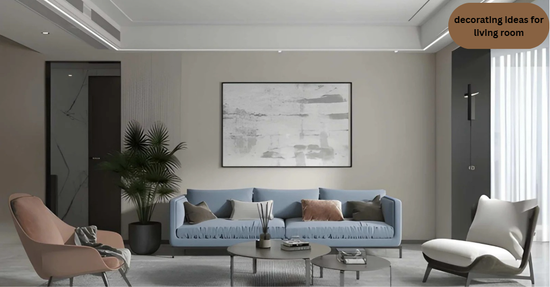
Pick one soft base color for walls and large pieces, then repeat it in smaller doses on cushions and art.
Pantone named PANTONE 11-4201 Cloud Dancer its Color of the Year 2026 in December 2025, the first white in the program’s history. Test any white against your bulbs, because the same paint reads warmer or cooler as the light changes.
Trends in interior design change every year, so treat a color of the year as a starting point.
Check the light reflectance value, or LRV, printed on most paint chips. A higher number bounces more light, which helps a dim room.
Easiest edible plants to grow in 5-gallon buckets can add a fresh green accent beside a bright sliding door. Use buckets with drainage holes and set each on a saucer to protect the floor.
Match the plan to your budget, space, and timeline
Spend first where the room looks most unfinished, and let your situation set the order.
If you’re unsure how to decorate a living room on a small budget, start with bulbs, lamps, and a rug that fits.
- Renter on a tight budget: rug, warm bulbs, lamps, and removable art, with the paint left alone.
- Room of 11 by 13 feet or smaller: a 6 by 9 rug, a slim sofa, and lamps in place of bulky side tables.
- Owner with dated walls: repaint first, since wall color sets the base for everything after it.
- Hosting soon: layout and light first, then cushions and art.
- One free weekend: measure, rearrange the furniture, and swap bulbs.
For visual references, save photos from sites such as DesignMode24 into one folder, sorted by room zone.
Avoid the mistakes that cost the most money
Most costly mistakes come from buying before measuring.
- Rug floating in the middle of the room. Fix: size it so the front legs of the seating rest on it.
- Cool white bulbs in living room lamps. Fix: read the warm-to-cool scale on the Lighting Facts label and buy warm.
- Painting from a small chip. Fix: paint a large sample and watch it in morning and evening light.
- Ordering a sofa without checking the route in. Fix: measure doorways, hallways, and stairs first.
- Buying fabric blind. Fix: ask for a swatch before you order.
If a listing leaves out fabric details, contact designmode studios or the maker directly before you pay.
Open-plan rooms break the usual order. Define the seating zone with the rug first, as Revival Rugs advises for open layouts, then place furniture around it. Keep paint codes and receipts in one folder, labeled designmode24 design if you like.
Answers to what people ask before they start
What is the ideal distance between a coffee table and a sofa?
Leave 12 to 18 inches between the sofa and the coffee table. That gap keeps the table within arm’s reach without crowding anyone’s knees. Add about 30 inches between the table and other furniture, such as a TV stand, so people can walk through without turning sideways.
What size rug works in a living room?
An 8 by 10 rug fits a room of about 11 by 13 feet, and a 6 by 9 suits anything smaller. Whatever the size, aim for at least the front legs of the sofa and chairs on the rug. Tape the outline on the floor first to check the fit.
What light bulb color is best for a living room?
Warm white bulbs, around 2200 to 3000 Kelvin, are the usual pick for a living room because they match the soft glow of older incandescent bulbs. Check the warm-to-cool scale on the Lighting Facts label. Buy about 800 lumens to replace a 60-watt bulb.
Do I need new furniture to redecorate?
No, a better layout, a fitted rug, warm bulbs, and fresh paint can change a living room without new furniture. Furniture is usually the biggest cost, so replacing a piece only after measuring shows it blocks the walkway or crowds the room.
Your next steps for a living room that feels finished
The best decorating ideas for living room spaces follow one order: fix the layout, size the rug, warm the light, then choose colors. Done in that order, even a modest budget produces a room that looks planned.
- Measure the room and mark a walkway of 30 inches or more on the floor with tape.
- Tape the outline of a rug that puts at least the front legs of your seating on it.
- Read the Lighting Facts label on each lamp bulb and replace any cool white one with a warm white at about 800 lumens.