

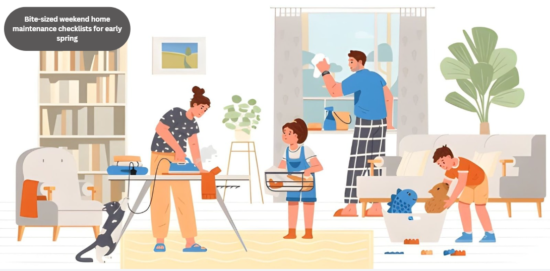
Early spring is when small house problems turn into big ones if you ignore them. A stuck window, a clogged gutter, a loose deck board. None of it looks urgent in March, but by June you’re paying a repair bill instead of a hardware store receipt. That’s why bite sized weekend home maintenance checklists for early spring work so well. You handle one small area at a time, on your own schedule, instead of losing an entire Saturday to a task list that never ends.
I started breaking my own spring maintenance into weekend chunks after too many exhausting “clean everything in one day” attempts that left half the list undone by noon. Bite-sized weekend home maintenance checklists for early spring aren’t about doing less. They’re about doing the right things at the right time, in an order that actually makes sense for how houses age.
What Counts as Early Spring Maintenance

Early spring maintenance means the specific home checks and small repairs you do once winter eases but before summer heat and storms arrive. It covers exterior inspection, gutter clearing, HVAC prep, and minor repairs that prevent bigger seasonal damage. Done in short sessions, it protects the house without eating your whole weekend.
Bite-sized weekend home maintenance checklists for early spring make seasonal upkeep easy with simple tasks you can finish in a few hours each weekend.
According to the National Association of Home Builders, deferred exterior maintenance is one of the leading causes of costly repairs reported by homeowners surveyed in 2024. Their approach to designmode24 design work leans on the same logic this checklist does, small consistent effort over big overwhelming projects.
Weekend One, The Exterior Walkthrough

Start outside, since that’s where winter leaves the most damage.
Walk the perimeter and check for these:
- Missing or curling shingles on the roofline
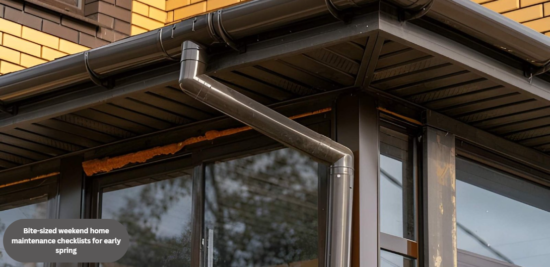
- Water stains or sagging where gutters meet the fascia board
- Clogged gutters, since these send water into your foundation instead of away from it
- Soil sloping toward the house instead of away from it
- Cracks in the driveway or walkway from freeze and thaw cycles
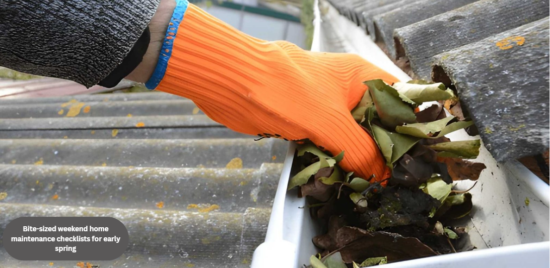
Clear the gutters before spring rains arrive. This single task prevents most of the basement moisture complaints that show up later in the season.
If grading is an issue, a bag of topsoil and an afternoon of raking can fix minor slope problems before they become a drainage contractor’s bill.
Weekend Two, Windows, Doors, and Seals
Windows and doors take a beating over winter, mostly because the seals shrink and crack in the cold.
Run your hand along the weatherstripping on each door and window. Replace anything that feels brittle or lets daylight through.
The Department of Energy notes that air leaks around windows and doors can account for a meaningful share of a home’s heating and cooling losses each year. That means this small fix pays for itself through lower summer cooling bills.
Quick weekend two checklist:
- Check weatherstripping on all exterior doors
- Inspect window seals for cracking or gaps
- Re-caulk around frames if needed
- Test that windows open and close smoothly
- Lubricate sticky locks and hinges
Weekend Three, HVAC and Safety Devices
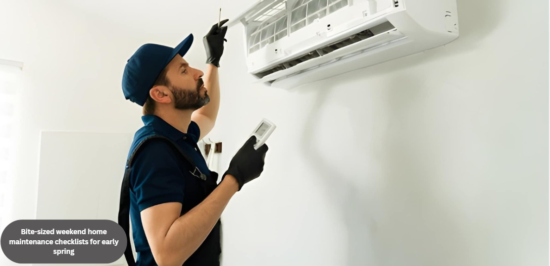
Your HVAC system worked hard all winter and it’s about to switch jobs entirely.
Before you switch on the air conditioner for the first time, change the filter. A clogged filter forces the system to work harder, which shortens its life and raises your electric bill.
Water heaters need attention too. Draining a few gallons clears out sediment that builds up over winter, and it helps the unit run more efficiently. This takes fifteen minutes.
Safety devices matter just as much as the systems themselves. The Consumer Product Safety Commission has continued to report that a large share of home fire deaths occur in homes with missing or non functional smoke alarms.
Weekend three checklist:
- Replace the HVAC filter
- Vacuum vents and clear blocked airflow
- Drain a few gallons from the water heater
- Test smoke detectors and carbon monoxide alarms
- Replace batteries in every alarm, even ones that still work
Weekend Four, Basements and Crawl Spaces
Basements and crawl spaces don’t get much foot traffic, so problems there go unnoticed the longest.
Look for these signs on your walk through:
- Damp spots on walls or floors
- A musty smell that wasn’t there before
- Any sign of pest activity
- Cracks in the foundation wall
Catching a small leak in March is a caulk job. Catching it in August, after months of quiet damage, is often a mold remediation job.
Weekend Five, Outdoor Living Spaces
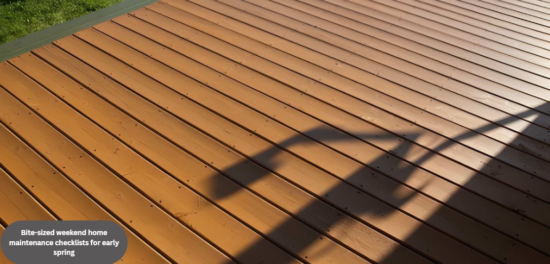
Deck boards that flex or feel soft under your foot have likely absorbed winter moisture. Check them before you put weight on them all summer.
Railings deserve a firm shake too, since loose railings are a common cause of backyard injuries once people start hosting again.
If your backyard is mostly bare concrete, this is also the season people start asking how to transform a concrete backyard into a garden for beginners. Raised planter beds are the honest answer, since they let you build soil depth without breaking up existing concrete.
Outdoor checklist:
- Test deck boards for soft spots
- Shake railings to check for wobble
- Clean and inspect outdoor furniture
- Check irrigation lines for winter cracks
Indoor Spaces Worth a Fresh Look
If you’re also rethinking how your rooms function this spring, it’s worth mentioning that people often ask how to layout a narrow 10×12 living room on a budget around the same time they’re doing structural upkeep. A tidy, well maintained room is easier to arrange well.
A narrow space works best with:
- Furniture pushed against the walls
- A rug that defines the seating area without crowding the walkway
- Light colors to keep the room feeling open
For readers who want design inspiration alongside maintenance, the interior design designmode24 team often notes that a well kept home is simply easier to style, since fresh paint and clean surfaces make furniture and decor choices look intentional.
Building a Checklist That Fits Your Weekend
The mistake most people make is writing one giant list and trying to finish it in a single day.
Split tasks by location instead:
- One weekend for exterior and gutters
- One weekend for windows and doors
- One weekend for HVAC and safety devices
- One weekend for basement and crawl space
- One weekend for outdoor living spaces
Each session should take two to three hours, not an entire day. That’s the whole point of keeping these checklists bite sized.
Keep a simple written record of what you did and when, even if it’s just notes on your phone. Next spring, you’ll thank yourself for remembering which gutter needed extra attention.
The Basic Tools Worth Having
For anyone tackling repairs solo, having the right basics on hand matters more than owning a full workshop.
- A good multi tool
- A stud finder
- A decent caulk gun
- A flashlight with fresh batteries
- Basic replacement filters and batteries on hand
If you want a longer rundown, designmode24 tools tech guides go into more detail on what’s actually worth owning versus what sits in a drawer unused.
A Quick Reference Table
| Weekend Focus | Main Tasks | Rough Time Needed | Tools You’ll Need |
| Exterior and Gutters | Roof check, gutter clearing, grading fix | 2 to 3 hours | Ladder, gloves, garden trowel |
| Windows and Doors | Weatherstripping, seal check | 1 to 2 hours | Weatherstrip tape, utility knife |
| HVAC and Safety | Filter change, alarm test, water heater drain | 1 to 2 hours | New filters, batteries, bucket |
| Basement and Crawl Space | Moisture check, pest signs | 1 to 2 hours | Flashlight, screwdriver |
| Outdoor Living | Deck check, railing check, planter setup | 2 to 3 hours | Level, gloves, trowel |
Wrapping It Up
None of this requires a contractor or a wasted weekend. Bite-sized weekend home maintenance checklists for early spring work because they match how people actually have time to give, a few hours here and there instead of one exhausting push.
Pick one section this weekend, work through it, and move to the next one when you’re ready. Your house will be in better shape by summer, and you won’t have burned an entire season doing it. Start small, stay consistent, and let the checklist carry the mental load so you don’t have to.
FAQ
How long does spring home maintenance actually take?
Split into weekend chunks, each session runs two to three hours. The full seasonal walkthrough across five weekends adds up to roughly 10-12 hours total, not one exhausting day.
What is the most important early spring maintenance task?
Clearing gutters comes first. Clogged gutters send water toward the foundation instead of away from it, which causes most of the basement moisture issues homeowners deal with later in the season.
When should HVAC filters be changed in spring?
Before switching on the air conditioner for the first time. A clogged filter makes the system work harder, which raises electric bills and shortens the unit’s lifespan.
Do smoke alarm batteries need replacing even if they still work?
Yes. Spring maintenance checklists call for replacing batteries in every alarm regardless of whether they’re currently functioning, since dead batteries are a common factor in home fire deaths.
What tools are needed for basic spring home maintenance?
A multi tool, stud finder, caulk gun, flashlight with fresh batteries, and spare filters and batteries cover most weekend maintenance tasks without needing a full workshop.