
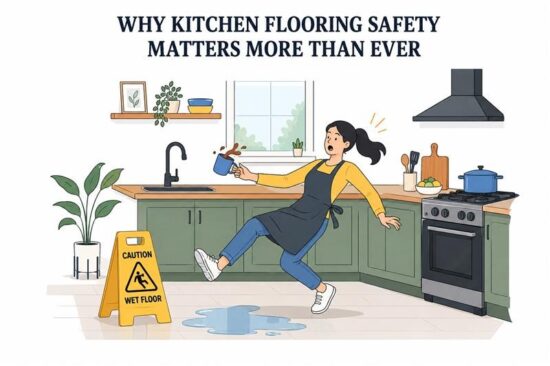
Kitchen hazards normally means hot pans. They can be sharp knives or an open flame. However, anyone spending real time cooking daily will tell you the real enemy is underfoot.
Kitchen floors are inherently tough, high-risk environments. Water spills near the sink constantly. Oil splatters freely by the hot stove. Loose ingredients fall onto hard tiles. Also, you need to stand for hours. So, a kitchen floor is a slick, exhausting workspace.
It is vital to focus on kitchen floor safety. It protects your body from chronic strain. It stops serious falls before they happen. Good floor safety also makes cooking much more enjoyable.
The Recipe for a Dangerous Kitchen Slip
A dry, clean floor becomes treacherous in seconds. Understanding slip physics helps explain the danger clearly. Standard sweeping and mopping are simply not enough alone.
Water and Hydroplaning
Rinsing vegetables always creates a few water splashes. Ice cubes melt silently under the fridge. This water creates a thin barrier on the floor.
You step down expecting normal shoe friction. Instead, your shoe slides right over the liquid. It acts just like a car hydroplaning on wet roads. You lose balance before you even realize you slipped.
Cooking Fats and Oils
Cooking grease is far worse than water. Butter drips off the counter onto hard tiles. Animal fats leave behind an invisible, slick film.
Standard shoe soles cannot grip oily surfaces well. Grease doesn’t evaporate like water. It stays on the floor until scrubbed deeply. A tiny grease patch causes sudden, severe falls.
Micro-Debris and Loose Powders
Dry ingredients are surprisingly dangerous on hard floors. Flour dusts the floor during baking sessions. Grains of sugar and salt spill during prep work.
These tiny particles act like microscopic ball bearings underfoot. You step onto the loose powder expecting grip. Your foot slides out unexpectedly, even on dry tiles.
High-Momentum Movement
People move fast inside a busy kitchen space. Cooks carry heavy stockpots across the room quickly. Servers turn sharp corners holding hot, full plates.
Speed increases the momentum of any accidental slip. A minor trip becomes a dangerous, high-impact crash.
The Hidden Cost of Hard Floors: Physical Fatigue
Slips get attention because they happen so fast. However, standing on hard floors causes slow, cumulative damage.
Modern kitchens have hard flooring materials everywhere. Porcelain tile and concrete look great. However, these hard surfaces offer zero shock absorption underfoot.
When you stand on tile for hours, problems build. Every step sends shockwaves back up your body.
Joint and Spinal Compression
Hard floors do not yield under your weight. The impact force bounces directly back into your bones. Your feet and ankles absorb heavy pressure. Your lower spine compresses slowly over time. After two hours, this causes deep aching and stiffness.
Circulation and Muscle Tension
Standing still on hard ground forces constant muscle tension. This strain severely restricts healthy blood circulation.
Blood pools slowly in your feet and lower legs. You end up with heavy, swollen legs by evening. It increases the risk of varicose veins.
Plantar Fasciitis
The thick band of tissue under your foot is vulnerable. It is called the plantar fascia. It supports your arch during every single movement.
Pressing this tissue against hard tiles creates severe strain, leading to painful inflammation called plantar fasciitis. It takes months to heal properly.
Mental Fatigue and Mistakes
Physical pain drains your nervous system very quickly. Aching feet make you feel tired much faster. Your mental focus begins to drop significantly.
Fatigue leads directly to careless kitchen mistakes. You might drop heavy pots or burn yourself easily. You pay less attention to slick spots on tiles.
Home Kitchens vs. Commercial Kitchens
Home kitchens and commercial restaurants have similar issues. However, their daily demands and operational scales differ completely. Knowing the differences will let you select the right protection.
Home Kitchens: Comfort for Daily Life
The home kitchen is the true heart of today’s house. Family members walk through the space all day long. Children and pets run across the tiles constantly.
Home cooks spend long hours preparing elaborate meals. They stand at sinks, counters, and stoves daily.
Safety solutions for home use must balance multiple needs:
- They must absorb water splashes near the sink area.
- They should offer plush cushioning for tired feet.
- They need to match existing home interior decor.
- They must clean easily using standard washing machines.
- They require low edges to prevent tripping family members.
Homeowners want to protect their beautiful floor surfaces. Placing stylish, high-quality kitchen mats in high-traffic prep areas solves this problem. It turns hard tiles into a comfortable workstation instantly.
Commercial Kitchens: High Strain and High Volume
Everything happens at top speed at busy restaurants. Cooks work intense twelve-hour shifts daily. Commercial kitchens have constant oil splatters and water spills. The safety of your kitchen impacts business profitability and legal liabilities.
Commercial floor solutions must meet extreme structural standards:
- They must withstand heavy foot traffic continuously.
- They need full resistance against harsh cooking oils.
- They must survive daily washdowns with strong chemicals.
- They require open drainage holes for liquid movement.
- They must stop bacterial growth in warm, humid air.
Equipping professional cooking lines with specialized, industrial-grade kitchen and restaurant mats is essential. It protects hard-working staff members from severe injuries. It reduces missed workdays and expensive compensation claims.
Key Materials and Engineering Innovations
Safety matting has evolved far beyond basic rubber sheets. Modern materials science offers advanced features built for specific kitchen environments.
Nitrile Rubber vs. Cheap PVC
Standard PVC mats degrade quickly when exposed to grease. Vegetable oils make cheap rubber swell and warp out of shape. The surface loses its grip and turns flat.
High-grade nitrile rubber compounds offer total grease resistance instead. They can bear up under animal fats, hot oils, and strong detergents. Their shape and slip resistance are not affected for many years.
Open-Hole Flow-Through Systems
Solid mats are unsafe in very wet dishwashing areas. Water accumulates on top of solid surfaces easily. This creates the exact slip hazard you want to avoid.
Open-holed drainage mats allow liquids to pass through completely. Water and food bits fall through the holes to the subfloor. The top surface remains elevated, dry, textured, and safe.
Beveled Borders and Molded Grips
A safety mat must never become a trip hazard itself. Premium kitchen mats feature low-profile, molded beveled edges on all sides. These flat borders let foot traffic transition smoothly over edges. Kitchen carts roll over them easily without catching.
On the underside, aggressive suction grips hold the subfloor tightly. The mat stays locked in place without creeping during fast movements.
Strategic Mat Placement in the Kitchen
Putting safety mats in the wrong spot wastes money. You must target the specific hazard areas in your layout.
The Sink and Dish Washing Pit
This zone handles continuous water splatters and soap suds. Flooring stays damp here throughout the entire day.
At home, use absorbent matting to catch flying water drops. Use open-holed rubber drainage matting in commercial dish pits. This elevates feet above standing water completely.
The Cooking Line and Stove Area
The floor here endures hot oil splatters and heavy grease. Cooks step back and forth rapidly between frying pans.
You can use thick nitrile rubber mats around hot stoves. Ensure the material is rated for grease resistance and heat. This prevents slick oil films from building up underfoot.
Food Preparation Counters
Staff stand at prep tables for extended, unbroken periods. The main threat here is physical fatigue and joint compression.
Install dedicated anti-fatigue matting along long prep counters. Choose dense closed-cell foam or cushioned rubber surfaces. This keeps blood circulating through calf muscles properly.
Conclusion
People often spend large amounts of time inside kitchens. They cook meals for loved ones or feed hundreds of restaurant guests.
Taking care of the kitchen floor will protect the people standing on it. You can make it a safe place by eliminating slip hazards and providing soft cushioning. Now, everyone can cook with comfort and peace of mind.