
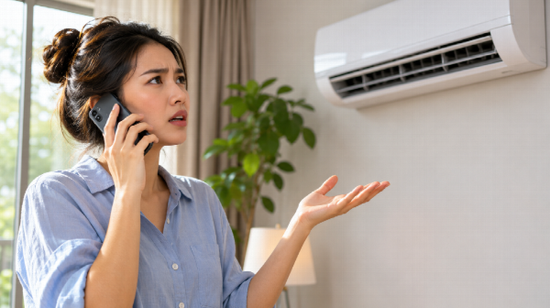
Air conditioners rarely choose a convenient time to stop working. A system can seem completely normal one afternoon and suddenly start blowing warm air, leaking water, making an unfamiliar noise, or refusing to turn on the next day.
During hot weather, the immediate reaction is often to call the first HVAC company available. While some air conditioning problems require prompt professional attention, others give homeowners enough time to check a few basics before scheduling service.
Knowing the difference can help protect your home, prevent additional equipment damage, and make the repair process considerably less stressful.
Not Every AC Failure Is An Emergency
A house that isn’t cooling properly is uncomfortable, but reduced cooling alone doesn’t necessarily mean the system is failing.
Sometimes the cause is relatively simple. The thermostat may have been changed accidentally, a dirty air filter may be restricting airflow, or furniture could be blocking an important return vent.
Other times, continuing to run the system can make the problem worse.
Homeowners should pay closer attention when an AC problem involves:
- Repeated circuit breaker trips.
- Burning or electrical odors.
- Grinding, screeching, or banging sounds.
- Significant water leaking around the equipment.
- Ice repeatedly developing on the system or refrigerant lines.
- An air conditioner that continually starts and shuts down.
- A complete loss of cooling during dangerously hot weather.
These symptoms can indicate electrical, mechanical, drainage, airflow, or refrigeration problems that require a trained technician to properly diagnose.
Burning Smells Should Never Be Ignored
An unusual odor from an air conditioning system deserves attention, especially if it smells electrical or like burning plastic.
Electrical components, motors, wiring, and other parts inside an HVAC system can overheat or fail. Continuing to operate the equipment while something is overheating can potentially cause more extensive damage.
Turn the air conditioner off at the thermostat rather than repeatedly restarting it to see if the smell disappears.
Smoke or an especially strong burning odor should be treated as a potential safety issue. Leave the home if necessary and contact emergency services when there appears to be an immediate fire risk.
Repeated Breaker Trips Are A Warning Sign
Circuit breakers exist to interrupt electrical power when unsafe conditions are detected.
A breaker that trips once doesn’t automatically mean an air conditioner has suffered a major failure. If it repeatedly trips after being reset, something may be causing the system to draw more electrical current than it should.
Continually resetting the breaker isn’t a solution.
Possible causes can include failing electrical components, motor problems, compressor issues, wiring concerns, or other equipment faults. Identifying the actual cause requires professional electrical and HVAC testing.
Leaving the system off until it can be inspected is usually safer than repeatedly forcing it back into operation.
Water Around Your AC Can Become A Bigger Problem
Air conditioning naturally produces condensation as it removes heat and humidity from indoor air. Under normal operating conditions, that moisture drains away from the equipment.
Problems develop when the drainage system stops working correctly.
A clogged condensate drain, overflowing drain pan, frozen evaporator coil, or another drainage issue can cause water to collect around the indoor unit.
A small HVAC problem can quickly become a home repair problem if that water begins affecting:
- Drywall.
- Flooring.
- Ceilings.
- Insulation.
- Cabinets.
- Nearby belongings.
Homeowners who notice substantial water around their system should consider turning it off and arranging an inspection before additional water damage occurs.
Ice On An Air Conditioner Isn’t Normal
People sometimes assume ice on an AC system means the equipment is working especially well.
The opposite is usually true.
Ice can develop when airflow across the evaporator coil becomes restricted or when another condition prevents the refrigeration system from operating correctly.
Potential causes include dirty filters, blocked airflow, dirty coils, refrigerant problems, or mechanical issues.
If you see ice, shut off cooling to let the system thaw naturally. Never scrape ice from coils or refrigerant lines because they can be easily damaged.
A fresh filter may solve a simple airflow restriction. If ice returns after the system has thawed, it needs professional attention.
Strange Noises Can Signal Mechanical Trouble
HVAC equipment makes normal operational sounds, including motor hum, airflow through ductwork, and the sound of the compressor starting.
New noises are different.
Grinding, banging, screeching, rattling, or unusually loud buzzing can indicate that a component isn’t operating normally. A loose part, motor bearing, fan assembly, compressor component, or electrical issue may be responsible.
Noise alone can’t reliably identify the failed component.
The important question is whether the sound is new, unusually loud, or becoming progressively worse. Continuing to operate equipment with a mechanical problem can sometimes turn a manageable repair into a more expensive failure.
Start With A Few Safe Checks
Not every cooling problem requires immediate technical work.
Before calling an HVAC company, homeowners can perform several basic checks without opening the equipment or touching electrical components.
Confirm that:
- The thermostat is set to COOL.
- The selected temperature is below the current indoor temperature.
- The air filter isn’t severely clogged.
- Supply vents are open and unobstructed.
- Return grilles aren’t covered by furniture or other objects.
- The outdoor unit isn’t buried beneath leaves or debris.
- There’s no obvious ice or substantial water around the equipment.
These simple steps can rule out several common problems.
Homeowners shouldn’t remove equipment panels, work on wiring, add refrigerant, or repeatedly reset electrical breakers. Qualified HVAC professionals should handle those tasks.
Extreme Heat Changes The Situation
The urgency of an air conditioning failure also depends on the conditions inside the home.
During periods of extreme heat, indoor temperatures can climb quickly after an AC system fails. This is especially concerning when older adults, infants, or people sensitive to high temperatures are present.
A household in these circumstances may need to arrange HVAC service sooner and move vulnerable family members somewhere cooler while repairs are underway.
If you’re unsure whether your situation warrants immediate service, review this guide covering common questions about emergency AC repair near me from Igloo Air Conditioning & Heating. It explains common warning signs, safe homeowner checks, and when professional diagnosis should be the next step.
What To Tell The HVAC Company
Providing detailed information when scheduling a repair helps the technician understand what’s been happening before arriving.
Be prepared to explain:
- When the problem first appeared.
- Whether the system stopped completely or simply stopped cooling.
- Any unusual sounds or odors.
- Whether water or ice is visible.
- Whether a breaker has tripped.
- What the thermostat currently displays.
- Whether the problem has occurred previously.
- Any recent maintenance or repair work.
Don’t worry about diagnosing the system yourself. A clear description of the symptoms is much more useful than guessing which component may have failed.
Repair Doesn’t Automatically Mean Replacement
A sudden AC failure can make homeowners worry they’ll need an entirely new system right away.
That isn’t always the case.
Many breakdowns involve individual components that can be repaired or replaced while the rest of the equipment remains serviceable. Other systems may have reached the point where frequent breakdowns, declining performance, age, and repair costs make replacement more practical.
A professional diagnosis should come before that decision.
A reputable HVAC technician can explain what failed, offer repair options, and help the homeowner compare costs against the existing system’s condition and expected life.
Regular Maintenance Can Reduce Surprise Breakdowns
No maintenance program can guarantee that an air conditioner will never fail.
Routine service can still identify developing problems before they become urgent.
Technicians can inspect drainage components, electrical connections, coils, airflow, motors, and other parts of the system while looking for abnormal wear or performance.
Maintenance also gives homeowners a chance to address smaller issues before peak cooling season puts the system under its heaviest workload.
Know When To Stop Troubleshooting
Homeowners can safely check thermostats, filters, vents, and obvious obstructions. They shouldn’t feel responsible for diagnosing complicated HVAC problems themselves.
Burning smells, repeated electrical problems, significant leaks, recurring ice, severe mechanical noises, and repeated system shutdowns are all good reasons to stop experimenting and call a professional.
Responding early can limit additional damage and give the technician a better chance of correcting the original problem before it affects other components.
A malfunctioning air conditioner doesn’t always require emergency service. Knowing the warning signs makes it much easier to recognize the situations that shouldn’t wait.
Frequently Asked Questions About Emergency AC Repair
What Counts As An AC Emergency?
An AC problem is more likely to qualify as an emergency when it involves electrical smells, repeated breaker trips, major water leaks, loud mechanical noises, or a complete loss of cooling during extreme heat. The urgency can also depend on who is in the home and how quickly indoor temperatures are rising. If the system appears unsafe to operate, turn it off and contact a qualified HVAC technician.
Should I Turn Off My AC If It Is Making A Strange Noise?
Yes, especially if the noise is loud, new, or sounds like grinding, banging, screeching, or heavy buzzing. Continuing to run the system could cause additional damage if a mechanical component is failing. Turning it off until a technician can inspect it is often the safest approach.
Why Is My AC Running But Not Cooling The House?
Several issues can cause an air conditioner to run without cooling effectively. Common possibilities include a dirty air filter, restricted airflow, thermostat problems, frozen coils, refrigerant issues, or a failing component. Homeowners can safely check the thermostat, filter, and vents, but persistent cooling problems should be inspected by a professional.
Is Water Leaking From An AC Unit An Emergency?
A small amount of condensation is normal, but visible water pooling around the indoor unit is not. A blocked drain line, overflowing drain pan, or frozen coil can cause water to escape the system and potentially damage flooring, ceilings, drywall, or nearby belongings. Turning the system off and arranging service can help limit additional damage.
Can I Reset My AC Breaker If It Trips?
A breaker that trips once may sometimes be reset after the system has been turned off. If it trips again, don’t keep resetting it. Repeated breaker trips can point to an electrical or mechanical problem that should be inspected by an HVAC professional.
Why Is There Ice On My Air Conditioner?
Ice can form when the evaporator coil gets too cold, often because of restricted airflow or a refrigeration problem. A severely dirty filter, blocked airflow, dirty coil, or refrigerant issue may be responsible. Turn off the cooling system and allow the ice to melt naturally before arranging an inspection if the problem returns.
How Quickly Should I Call For AC Repair During A Heat Wave?
It is usually best to call as soon as possible when the system stops cooling during extreme heat. Indoor temperatures can rise quickly, especially in homes with limited ventilation or strong sun exposure. Older adults, infants, pets, and people sensitive to high temperatures may need help sooner.
Can Emergency AC Problems Be Prevented?
Not every breakdown can be prevented, but regular maintenance can reduce the chances of unexpected failures. Seasonal inspections can identify worn components, drainage problems, airflow restrictions, and electrical concerns before they cause a complete shutdown. Regularly replacing filters and watching for changes in system performance can also help.
How Do I Know Whether To Repair Or Replace My AC?
The answer usually depends on the system’s age, the cost of the repair, how often it breaks down, and its overall efficiency. A single repair doesn’t automatically mean you need to replace it. A qualified technician can inspect the equipment and explain whether repairing the existing system or replacing it makes more financial sense.


