
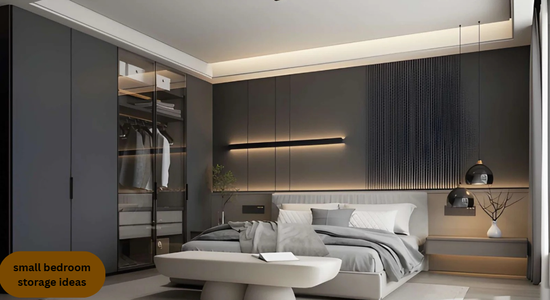
The best small bedroom storage ideas use vertical and under-bed space first. A queen bed with 12 inches of clearance hides about 33 cubic feet of open room.
Small bedroom storage ideas work best when they use height and hidden volume instead of floor space. In a 10×12 bedroom, the floor holds 120 square feet, but the room holds 960 cubic feet. Under the bed, along the upper wall, and above the door are the zones that often sit empty.
Key Takeaways
- A 10×12 bedroom with an 8-foot ceiling holds 960 cubic feet but only 120 square feet of floor.
- About 33 cubic feet are hidden in a queen bed with 12 inches of space.
- The under-bed, upper-wall, and above-door zones total about 57 cubic feet and use no extra floor.
- A 60-inch dresser holds about 20 cubic feet and takes 7.5 square feet of floor.
- All volumes here are gross. Usable volume is lower.
What Are Small Bedroom Storage Ideas?
Any furniture selection or arrangement modification that increases storage without requiring additional floor space is a tiny bedroom storage suggestion. The greatest ones take up the available space in the room. Floor space is fixed in a small room. Height is not.
Smart design design choices start with going vertical: tall dressers, wall shelves, and over-door hooks all add storage without using more floor.
For more small-room ideas, see how design designmode keeps every piece working hard while the room stays open.
The 10×12 Volume Math
The floor area of a 10×12 bedroom is 120 square feet. With an 8-foot ceiling, it holds 960 cubic feet of air. That is room volume, not storage volume. The table counts only the boxes that can hold things.
A queen mattress measures 60 by 80 inches, per the Sleep Foundation’s mattress size guide. It covers 33.3 square feet, or 28% of the floor. Start any small bedroom layout by measuring height, not just floor.
Design tools tech can make this step easier. Free room planners let you enter your length, width, and ceiling height, then test furniture sizes before you buy anything.
Need a second opinion on your layout? Contact DesignMode24 for practical small-space advice.
| Zone | Assumed size | Gross volume | Extra floor used |
| Under a queen bed | 60 x 80 in, 12 in clearance | 33.3 cu ft | 0 sq ft |
| Upper wall band | One 10 ft wall, 6 to 8 ft high, 12 in deep | 20 cu ft | 0 sq ft |
| Above the door | 12 inches deep, 16 inches broad, and 36 inches wide | 4 cu ft | 0 sq ft |
| Three hidden zones | 57.3 cu ft | 0 sq ft | |
| 60-inch dresser | 60 x 18 x 32 in | 20 cu ft | 7.5 sq ft |
The three hidden zones hold almost three times the gross volume of the dresser. The dresser takes 6% of the floor. The hidden zones take none.box. Bins leave gaps, so usable space is lower for every option. Compare gross to gross.
Two kinds of numbers appear here. Room volume (960) measures air. Storage volume (57) measures boxes that hold items. Every storage figure is gross, meaning the full measured
How to Measure Your Own Room
- Multiply room length, width, and ceiling height.
- Measure the gap under the bed frame. Multiply it by the mattress length and width.
- Take a measurement of the space between the door’s top and the ceiling.
- Pick a shelf depth, such as 12 inches, and a band height for one wall.
- Add the zones. Compare the total with your dresser’s gross volume.
The same steps work in other rooms. Anyone asking how to layout living room on a budget can measure the box, list the empty zones, and add storage only where floor space stays clear.The math below assumes an 8-foot ceiling and standard furniture sizes. More room layout guides are published by designmode24 design.
Where the Hidden Storage Sits
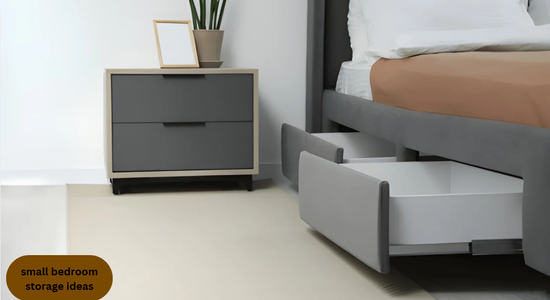
How much can you store under a queen bed?
A queen bed with 12 inches of clearance holds about 33 cubic feet underneath, enough for seasonal clothing, spare bedding, and shoes in flat bins. Before purchasing bins, measure the space between the floor and the frame. Rolling bins under 12 inches tall slide out without moving the bed.
inside home storage ideas often start with this same under-bed space, since it adds capacity without taking up any floor area.
Our guide to DesignMode24 layouts shows how to pair under-bed bins with slim dressers and wall shelves.
Is the wall above the door worth using?
Yes. A 36-inch-wide, 80-inch-tall door leaves 16 inches below an 8-foot ceiling, which fits a 12-inch-deep shelf holding about 4 cubic feet. Use it for light, rarely used items like luggage or gift wrap. Anchor the shelf into wall studs.
What fits on the upper wall band?
A shelf band from 6 to 8 feet high on one 10-foot wall adds about 20 cubic feet, best for seasonal and rarely used items. Anchor brackets into wall studs. A step stool keeps the top shelf reachable.
Which bed style adds the most storage?
A bed frame with built-in drawers or a lift-up base turns the under-bed zone into closed storage, but it costs more than open-frame bins. Drawer beds need pull-out room at the side or foot. Lift-up bases need none, but items are harder to reach.
2026 Trend: Traditional Bedrooms Need Vertical Storage
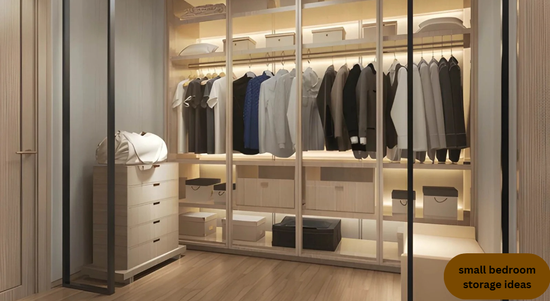
Houzz lists traditional-style bedrooms among its fastest-growing 2026 design trends, as reported by KBB Review in June 2026. Freestanding wardrobes and dressers are common in that look, and each one takes floor area. That makes the vertical zones more useful.
Closed storage also keeps a small room calm. For anyone working out how to decorate a small bedroom, matching bins and closed drawers hide clutter that would otherwise read as mess.
When the Math Does Not Apply
The 57-cubic-foot figure holds only under the stated assumptions. Four common cases break it:
- Low bed frames. A platform bed with a 6-inch gap cuts the under-bed zone in half, to about 17 cubic feet.
- Lower ceilings. A 7-foot-6 ceiling leaves 10 inches above an 80-inch door. That shrinks the door shelf to about 2.5 cubic feet.
- Sloped ceilings. The upper wall band is unusable on the low side of the slope.
- Rentals. Shelves that need drilling are off the table. Freestanding shelves work, but they use floor space.
An existing closet changes the ranking. A 6-foot-wide, 24-inch-deep reach-in closet holds 80 cubic feet gross, more than all three hidden zones combined. In that case, closet organization comes first.www. designmode24. com visit for more ideas
Keep heavy items off high shelves above the bed.
Small Bedroom Storage Ideas: FAQ
How can a little bedroom without a closet be made more storage-friendly?
Combine under-bed bins, wall-mounted shelves, and a freestanding wardrobe or rail to replace a missing closet while keeping most of the floor open. A 36-inch-wide, 24-inch-deep wardrobe takes 6 square feet, about 5% of a 120-square-foot room. Add a shelf band above it for seasonal items.
What kind of storage is ideal for a tiny bedroom without any floor space?
Under-bed storage is the best choice because it adds about 33 cubic feet under a queen bed with 12 inches of clearance and takes no additional floor area. Wall shelves above 6 feet come second, adding about 20 cubic feet on one 10-foot wall.
Do drawer beds make sense in a little bedroom?
When there is sufficient floor space next to or at the foot of the bed for the drawers to open completely, drawer beds are worthwhile. In a tight room, a lift-up base or rolling bins avoid that clearance problem. Additionally, since drawer beds are more expensive, bins are a better option for a low-cost bedroom.
How high should shelves go in a small bedroom?
Keep daily-use items at waist to shoulder height and reserve shelves above 6 feet for seasonal items that need a step stool. How often you use an item should set its zone. Anchor all high shelves into wall studs.
How much storage does a dresser really add?
A 60-inch dresser 18 inches deep and 32 inches tall has about 20 cubic feet of gross volume and takes 7.5 square feet of floor. That is 6% of a 10×12 floor. Drawer dividers and gaps cut usable volume below the gross figure.
Can renters use these storage ideas?
Yes. Under-bed bins, tension-mounted poles, over-door organizers, and freestanding shelving need no drilling, so renters can use them without risking a deposit. Freestanding shelving uses floor space, so it trades floor area for volume.
Bottom Line on Small Bedroom Storage Ideas
The strongest small bedroom storage ideas use the volume the room already has. In a 10×12 room, the space under the bed, above the door, and along the upper wall adds about 57 cubic feet without using any floor.Interior design designmode24 services include both storage and layout for a complete room concept.