

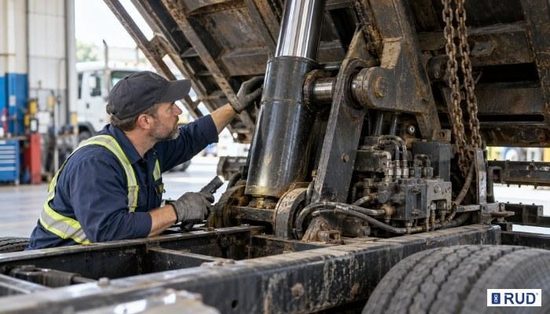
Truck hoists get treated as “fit and forget” gear, but that’s one of the most common misconceptions in fleet maintenance. In the worst cases, this thinking leads to a hoist failing mid-load, with no warning beforehand.
RUD Australia wants to debunk this myth. Here, we’ll explain why hoists need regular care and which wear points cause the most damage.
Many fleet managers only notice hoist problems once a truck is already off the road. If that sounds familiar, this article will change how you look at hoist upkeep. Keep reading to see what’s really happening inside your equipment.
Where This Vehicle Hoist Myth Really Comes From
Truck hoists look rugged and simple, so operators assume they need less care than other machinery on the shop floor. That assumption misses how hydraulic systems work.
Wear builds up inside the cylinder seals, the pivot pins, and the control valve long before anything shows on the surface. A hoist can run smoothly for years and still sit close to failure underneath.
We’ve seen fleets skip inspections for years without a single issue, and that’s exactly what builds the false sense of security. The truck keeps lifting, so nobody questions it, until the day it doesn’t.
The Hidden Wear Points on Every Truck Hoist
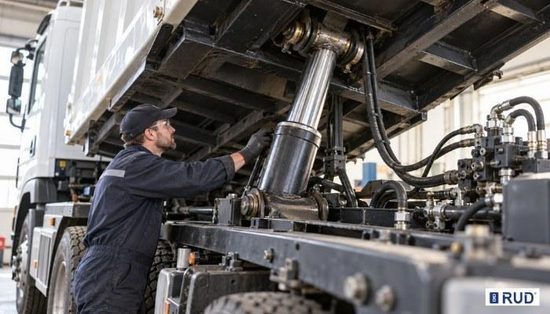
A truck hoist is made up of several parts working together, and each one wears down in its own way. When you know where to look, you can catch a fault early instead of dealing with a breakdown later on. We’ve broken down five of these wear points below, along with what each one means for your fleet.
1. The Hydraulic Cylinder Seals
Seals degrade from heat cycles and pressure, even on hoists that aren’t used every day. Once the rubber starts to harden or crack, fluid begins to seep past the seal instead of staying contained. From there, that seep turns into a slow leak.
Remember that it often goes unnoticed until the hoist loses lifting power halfway through a job. After that point, replacing the seals early costs a fraction of what a full cylinder rebuild runs.
2. The Pivot Pins and Bushings
Constant movement wears down pins and bushings over time, and it eventually leads to play in the lifting mechanism. Along with that play comes a slight shift in how the hoist sits under load, which isn’t always obvious to the eye.
That shift puts uneven pressure on one side of the hoist frame, and after a certain time, the frame itself starts to carry weight it wasn’t built to handle. If you leave worn pins unchecked, you risk uneven lifting and, in some cases, sudden mechanical failure.
3. The Safety Lock Mechanism
The lock mechanism stops the bed from dropping unexpectedly during loading or unloading. Beyond the lock itself, the springs and pins that hold it in place need just as much attention.
Usually, dirt, rust, or a worn spring are the culprits behind a lock that won’t engage properly. Once that lock fails, a routine tip can turn into a serious safety incident within seconds.
4. The Lifting Chains and Cables
Chains and cables stretch and fray gradually, especially under repeated heavy loads. Corrosion from weather exposure adds to the problem. Gradually, it eats away at the metal from the inside out, long before any damage shows on the surface.
According to WorkSafe WA’s safety alert on hoist maintenance, hoists must be inspected before each use and serviced regularly by a competent person. With that in mind, regular tension checks catch wear before a chain snaps under load.
5. The Control Valve System
The control valve regulates fluid flow, which directly affects how smoothly the hoist operates. Contaminated hydraulic fluid is one of the most common causes of valve failure, and it’s mainly the root cause behind other issues too.
A sticking valve usually points to a fluid problem well before it turns into a mechanical one. So, checking fluid quality during a service catches the issue before the valve itself takes damage.
What Happens When Regular Maintenance Gets Skipped?
Skipped maintenance doesn’t fail safely. It usually fails suddenly, often in the middle of an active lift. Once one part goes, the damage rarely stops there, since a worn seal or a stuck valve puts extra strain on everything connected to it.
For a fleet, that strain shows up as:
- Unplanned breakdowns that pull trucks off the road
- Repair bills that cost more than scheduled checks
- Lost delivery windows and frustrated drivers
- Safety risks for anyone working near the hoist
Look, a single ignored fault rarely stays small. But within weeks, it can take down a whole hoist, and the truck along with it.
Reactive Repairs vs Scheduled Checks: Which Costs More?
Most fleet managers only compare the price of a repair against the price of a service. But that’s not where the real cost sits. Let’s break down what each option actually costs a fleet over time.
| Reactive Repair | Scheduled Check |
| Emergency labour and towing fees | Planned labour at standard rates |
| Truck off the road for days | Truck back in service within hours |
| Replaces failed parts | Catches worn parts before failure |
So, it’s clear that a scheduled check costs less upfront, and it keeps the truck earning instead of sitting idle. Reactive repairs often carry a bigger bill, too, after you count the lost workdays on top of the parts themselves.
A Maintenance Routine That Keeps Fleet Uptime on Track
A good maintenance routine doesn’t need to be complicated. It just needs to run on a schedule that nobody skips, and that consistency is what protects uptime over the long run.
If you follow these steps, your hoist stays reliable, and your trucks stay out on the road where they belong.
- Visual Checks Every Week: Grab a torch and look over the seals, pins, and cables before the first job of the day. Most techs can spot early wear in under five minutes once they know what to look for.
- Fluid Levels and Quality: Hydraulic fluid should look clean, not cloudy or dark. If it’s picked up grit or moisture, that contamination is already working its way toward the valve.
- Lock Mechanism Testing: Don’t just eyeball the safety lock; test it under an actual load. A lock can look perfectly fine and still fail the moment real weight hits it.
- A Written Maintenance Log: Jot down what you find after every check, even if it’s nothing. Six months in, that log tells you exactly where the wear patterns are starting to form.
As outlined in the NHVR’s National Heavy Vehicle Inspection Manual, scheduling checks around usage hours tends to work better than sticking to fixed calendar dates. Either way, a routine like this keeps your team confident, your fleet compliant, and your operating costs lower across the board.
Keep Your Trucks Rolling: Build Hoist Checks Into the Routine
All we’ve tried to explain is that a short routine now beats a long, expensive repair later, and it keeps your whole fleet moving the way it should.
Once you’ve got the basics down, the rest comes together:
- Book inspections on a set schedule
- Log every fault as it happens
- Replace worn parts before they fail
- Train operators to spot warning signs
None of this takes much time out of the week. But it does require someone to take the first step. So make this week the one where your fleet gets the attention its hoists have been waiting on.
Truck Hoist FAQs: Quick Answers for Fleet Managers
Got a few more questions on your mind? Here’s what fleet managers usually ask once they’ve read this far.
How Often Should You Schedule Truck Hoist Maintenance?
Most technicians recommend a full inspection every three months, alongside the weekly visual checks covered above. Planning maintenance around actual operation hours, rather than a fixed date, keeps the schedule realistic for busier fleets.
Do Light Trucks Need the Same Hoist Care as Heavy Vehicles?
Yes, light trucks can carry substantial loads, even if it’s less than a heavy commercial vehicle. The hoist still needs the same routine, though. After all, performance depends on the equipment, rather than the size of the load.
What Should You Expect From Emergency Hoist Repair Services?
Emergency repair services should get your truck assessed fast and give you a clear timeline. Reliability is the most important factor here, since a rushed, low-quality fix often leads straight back to the same problem.
