
A dining table is more than a place to eat. It is often where families gather, guests are entertained, homework gets finished, and weekend plans somehow turn into long conversations over tea. That is why choosing the right dining table matters, especially in homes where space needs to work harder.
An extendable dining table offers a practical answer to this challenge. It gives you a compact everyday setup while still allowing extra room when friends or family come over. For households that want flexibility without sacrificing style, it can be one of the smartest furniture choices available.
Why Extendable Dining Tables Are So Practical
Modern homes are expected to do a lot. A dining room may also function as a workspace, homework area, entertaining space, or occasional buffet zone. A fixed large table can dominate the room, while a small table may quickly become frustrating when more people need to sit down.
An extendable design sits comfortably between the two.
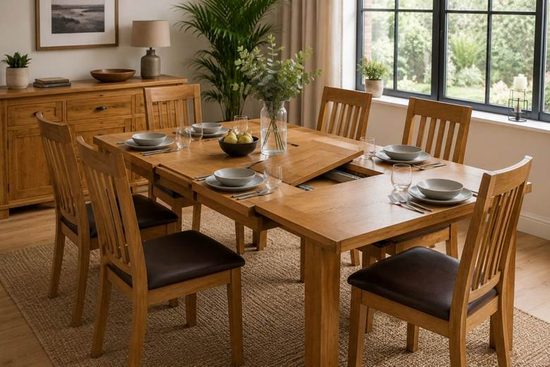
When closed, it keeps the room feeling open and easy to move around. When extended, it creates additional seating space without requiring another table or a completely different room layout. This makes it particularly useful for households that entertain occasionally rather than every day.
A Better Choice for Smaller Dining Areas
Not every home has a large dedicated dining room. Flats, apartments, cottages, and newer properties often have compact kitchen-diners where every centimetre matters.
A table that remains relatively compact during normal use helps preserve valuable floor space. You can keep walkways clear, pull chairs out comfortably, and avoid making the room feel overcrowded.
Then, when guests arrive, the table can be extended temporarily.
This adaptability makes extendable tables suitable for people who want the option of larger gatherings without permanently filling the room with oversized furniture.
Different Extension Mechanisms to Consider
Not all extending tables work in the same way. Understanding the mechanism before buying can help you choose a design that suits your lifestyle.
Butterfly Extension Leaves
A butterfly extension usually folds and stores within the table itself. When extra space is required, the tabletop is pulled apart and the hidden leaf unfolds into position.
This design is convenient because there is no separate extension panel to store elsewhere in the house.
Removable Extension Leaves
Some tables use additional leaves that are inserted manually when needed. These designs can offer excellent flexibility, particularly where one or more leaves can be added.
The main consideration is storage. The leaves need somewhere safe and dry to remain when not in use.
Sliding Extension Systems
Sliding tables often use smooth runners that allow one or both ends of the tabletop to move outward. The additional section may then rise, rotate, or slot into place.
These systems can be quick to operate and are particularly useful for households that extend the table regularly.
Choosing the Right Table Size
Before purchasing any dining table, measuring the room properly is essential.
It is not enough to consider the dimensions of the tabletop alone. You also need enough space around the table for chairs and movement.
As a general rule, try to leave a comfortable clearance between the table edge and surrounding walls, cabinets, or other furniture. This allows people to sit down and stand up without feeling squeezed.
Remember to measure the table in both its closed and fully extended positions. A table that fits perfectly when compact may become difficult to use once opened.
You should also consider how frequently you expect to extend it. If larger gatherings happen often, make sure the extended layout still feels comfortable rather than simply technically fitting into the room.
Seating Capacity Matters
Dining tables are often marketed by the number of people they can accommodate, but these numbers should be treated as a guide rather than an absolute rule.
Chair width has a major influence on seating capacity. Slim dining chairs can allow more people around the table, while upholstered chairs with broad arms require considerably more space.
Everyday seating should feel relaxed. Guests should be able to move their arms comfortably without constantly bumping into the person beside them.
If you regularly host family meals, consider buying a table that provides slightly more space than the minimum you think you need.
Choosing a Shape That Fits Your Room
Table shape has a strong effect on how the room feels and functions.
Rectangular extendable tables remain one of the most popular choices because they suit many dining rooms and can accommodate larger groups effectively.
Square tables work particularly well in balanced or compact spaces. Some extend into rectangular shapes, providing extra capacity when required.
Round extending tables create a sociable atmosphere because everyone faces towards the centre. They can also improve circulation in rooms where sharp corners would make movement difficult.
Oval designs offer a softer alternative to traditional rectangular tables and can be useful in narrower dining areas.
The right shape depends on the dimensions of your room, your preferred furniture style, and the number of people you typically entertain.
Why Material Quality Is Important
An extending table has more moving parts than a simple fixed table, so construction quality matters.
The frame needs to remain stable when the table is both closed and extended. Tracks, runners, hinges, and locking mechanisms should feel smooth and secure rather than loose or difficult to operate.
Solid wood is often chosen for dining tables because of its durability and character. Natural grain gives each piece individuality and works comfortably with both traditional and modern interiors.
Wood also has the advantage of ageing attractively when properly cared for.
When considering ranges from Oak Furniture UK, it can be useful to look at how the table’s wood tone, construction, and finish complement your existing chairs, sideboards, cabinets, or other dining furniture.
Matching the Table with Dining Chairs
A table rarely stands alone, so chair selection deserves just as much thought.
You do not necessarily need to buy a complete matching set. Mixing complementary chairs and tables can make a dining area feel more relaxed and personal.
For a wooden table, upholstered chairs can introduce softness and contrast. Wooden chairs provide a more consistent, traditional appearance, while contemporary designs with fabric or metal details can create a modern look.
Most importantly, check the chair height against the tabletop.
There should be enough space between the chair seat and the underside of the table for people to sit comfortably. Tables with thick aprons or structural frames may provide less legroom than expected, so measurements are worth checking.
Styling an Extendable Table for Everyday Use
Large dining tables can sometimes look empty when they are not set for a meal. The advantage of an extendable design is that you can keep it smaller for everyday life and style it more naturally.
A simple bowl, vase, small plant, or table runner can create a finished appearance without cluttering the surface.
Avoid permanently filling the table with decorations, especially if you use it regularly for work, meals, or family activities. A practical dining space should be easy to clear and use.
Lighting can also transform the area. A pendant light positioned above the centre of the table helps define the dining zone, particularly in open-plan rooms.
Perfect for Entertaining at Home
One of the biggest advantages of extendable furniture appears when guests arrive.
Instead of rearranging multiple rooms or adding temporary folding tables, you can increase the available dining space within minutes.
This creates a more organised and welcoming setup for birthdays, Sunday lunches, Christmas meals, dinner parties, or casual get-togethers.
Once everyone has gone home, the table can return to its smaller size and the room immediately feels more spacious again.
That kind of flexibility is difficult to achieve with fixed furniture.
Caring for a Wooden Dining Table
Good maintenance can help a dining table remain attractive for many years.
Use placemats and coasters to protect the surface from hot dishes, moisture, and spills. Clean up liquids promptly rather than allowing them to sit on the wood.
Avoid harsh cleaning chemicals unless they are specifically recommended for the table’s finish.
Dusting regularly with a soft cloth is usually enough for everyday care. Depending on the finish, occasional treatment with an appropriate wood-care product may help preserve the surface.
The extension mechanism should also be kept clean. Dust and debris can collect around runners and joints, making the system more difficult to operate over time.
Is an Extendable Table Worth It?
For many households, absolutely.
The real benefit is not simply having a bigger table. It is having the ability to change the furniture according to the situation.
You can enjoy a comfortable amount of space during everyday meals without sacrificing the option to host larger groups. That makes an extending design particularly valuable in homes where space is limited or where room layouts need to remain flexible.
It can also reduce the temptation to buy furniture that is unnecessarily large for normal daily use.
Final Thoughts
A thoughtfully chosen extendable dining table can make a dining area far more adaptable. It allows you to maintain an open, practical layout during everyday life while still being prepared for family gatherings and special occasions.
Before buying, consider the table’s closed and extended dimensions, seating capacity, extension mechanism, material, and relationship with the rest of your furniture.
The best design is one that feels natural when used by two or four people but can comfortably accommodate more when required. Get those details right, and your dining table can become a flexible centrepiece that continues to work as your household and lifestyle change.
