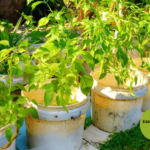

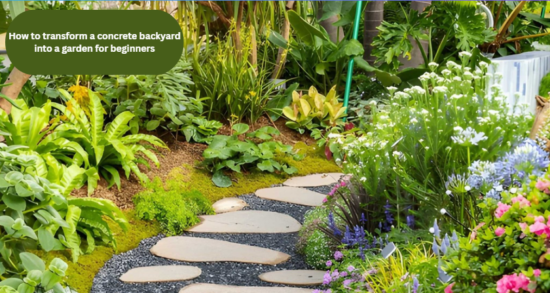
Here is how to transform a concrete backyard into a garden for beginners: leave the slab in place and grow in containers and raised beds with drainage holes. Fill them with potting mix, give vegetables six to eight hours of sun, and water when the soil feels dry.
Key Takeaways
- A concrete slab does not need to be removed, because University of Florida IFAS Extension notes that containers can sit on hard surfaces such as concrete.
- According to the Oregon State University Extension Service, fruiting crops like tomatoes, beans, and peppers require six to eight hours of direct sunlight every day.
- Because roots cannot reach the earth beneath the concrete slab, raised beds require 12 to 18 inches of soil.
- Containers dry out quickly on a sunny concrete patio, and daily watering is not unusual.
- Packaged potting mix works better than garden soil in containers.
What is a concrete backyard garden?
A concrete backyard garden is a growing space built on top of an existing slab with containers, raised beds, or both, so no concrete gets broken up.
How to Transform a Concrete Backyard Into a Garden for Beginners, Step by Step
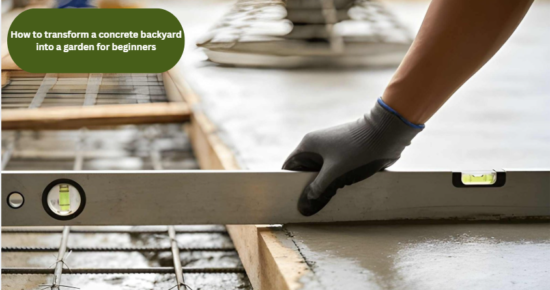
Map the sun first, then set up drainage-ready containers and raised beds, fill them with potting mix, and plant crops that match your light.
- Measure the sun. Spots with six to eight hours of direct light suit tomatoes, peppers, and beans.
- Check the slab. Note cracks, slope, and where rain pools so water has a path out.
- Choose containers with drainage holes. Oregon State University Extension says almost any container works if it drains well.
- Lift each container on bricks or wooden slats so it does not sit in standing water.
- Fill containers with packaged potting mix to within one-half inch of the top, as Clemson Cooperative Extension advises.
- Plant compact or dwarf varieties that fit the container size.
- When the soil seems dry, add water, and continue until the drainage holes are empty.
- Feed on a schedule. If you sprinkle dry fertilizer on top of the soil, repeat every three weeks.
How Deep Should Soil Be on a Concrete Slab?
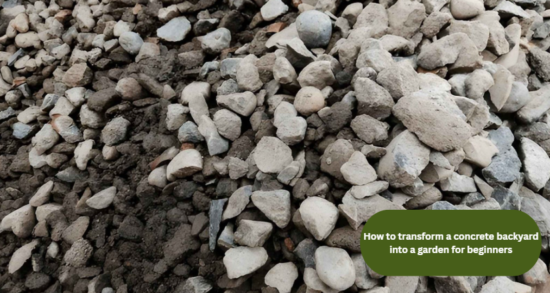
Raised beds on concrete need 12 to 18 inches of soil, because roots stay inside the bed. Homestead and Chill sets 12 inches as the minimum and 18 as the target, and Gardenary’s January 2026 guide recommends at least 18 inches whenever possible.
Container advice measures something different. University of Florida IFAS Extension gives six inches as the minimum soil depth in its container gardening guide, which applies to small containers, not beds.
| Setup | Soil depth | Soil volume | Depth figure from |
| Patio herb box, 12 x 48 inches | 8 inches | 2.7 cubic feet | University of Kentucky Extension |
| Small container | 6 inches minimum | Varies by size | University of Florida IFAS Extension |
| Raised bed, 4 x 8 feet | 12 inches | 32 cubic feet | Homestead and Chill |
| Raised bed, 4 x 8 feet | 18 inches | 48 cubic feet | Gardenary |
Volumes are calculated from length times width times depth.
How Much Soil Does One Raised Bed Need?
It takes 48 cubic feet of soil to fill a 4-by-8-foot bed that is 18 inches deep. The math is 4 x 8 x 1.5, which equals about 1.8 cubic yards.
University of Kentucky’s 12-by-48-by-8-inch patio herb box holds 2.7 cubic feet, since 4,608 cubic inches divided by 1,728 equals 2.67. One 18-inch bed therefore holds the soil of 18 herb boxes, so a first-time gardener should fill one herb box before committing to a full bed.
What Is the Most Common Beginner Mistake?
Filling containers with garden soil is the most common mistake, because it looks free and natural. Oregon State University Extension warns that garden soil and topsoil are heavy and hold too much moisture, and Clemson notes that the weaknesses of clay get worse inside a pot.
The fix is packaged potting mix, which is lightweight, sterile, and drains well.
Which Plants Grow Best on a Concrete Patio?
Herbs, cherry tomatoes, beets, and carrots are the easiest starters in containers. University of Kentucky extension lists beets, broccoli, cabbage, carrots, and cucumber as vegetables suited to containers.
- Full-sun fruiting crops: eggplant, tomato, pepper, yellow squash, and zucchini, according to University of Kentucky extension.
- Compact choices: patio-size cherry tomatoes and dwarf carrots such as Thumbelina.
- Herbs: a 12-by-48-by-8-inch box makes a full patio herb garden.
- Skip: corn, which Oregon State University Extension calls impractical in small spaces.
Oregon State University Extension Service’s 2025 container guide adds a timing tip. Replant pots with late-summer and fall veggies following spring and early-summer harvests.
How Often Should You Water a Garden on Concrete?
Water whenever the top of the soil feels dry, which is often daily in summer. Oregon State University Extension Service says containers dry out quickly on concrete in full sun, and daily watering is not unusual.
When water emerges from the drainage holes, stop. Soggy soil stresses roots just as dry soil does.
How Do You Make a Concrete Backyard Look Like a Real Garden?
Treat the slab as an outdoor room with zones, clear paths, and one focal point.
Anyone who knows how to decorate a small living room already has this skill, because both jobs start with defining zones and keeping walkways open.
Small living room such as a bench with hidden storage becomes a planter bench outdoors. room decor ideas such as layered textiles turn into weatherproof cushions and an outdoor rug.
Living room layout ideas start with traffic flow, and a slab needs the same. Leave a clear path between the door, the seating, and the watering spot.
Readers can sketch the footprint with designmode24 tools tech resources at www.designmode24before moving heavy pots.
DesignMode24 readers who search interior design designmode, designmode24 interior design, design designmode24, or designmode24 design are usually planning rooms, and the zone-and-path method works the same outside.
Hosting friends for the biggest sporting event means seating for a crowd, so group chairs in one zone and line pots along the edges. Questions about adapting a layout go through contact designmode24
The exception: a slab over a basement, garage, or other structure changes the advice, because wet soil is heavy and large beds need a load check from a building professional first. A deep-shade yard changes it too, since fruiting crops need six to eight hours of direct sun and leafy crops and herbs fit better.
Frequently Asked Questions
Can you grow a garden in a concrete backyard?
Yes, containers and raised beds sit directly on concrete and grow vegetables, herbs, and flowers.
Clemson Cooperative Extension notes that switching to containers also avoids soilborne disease and poor soil problems.
Do you need to remove the concrete before gardening?
No, leaving the slab in place works when you grow in containers or raised beds with drainage.
University of Florida IFAS Extension says containers carry their own soil, so they can sit on hard surfaces such as concrete.
How deep should soil be for plants on concrete?
Use at least six inches in containers and 12 to 18 inches in raised beds built on concrete.
Tomatoes, peppers, and beans benefit from the deeper end, since roots cannot grow into the ground below.
What are the easiest plants for a beginner concrete garden?
Herbs, compact cherry tomatoes, beets, and carrots are easy starters for containers.
A single 12-by-48-by-8-inch box holds a full herb garden and uses little soil.
How often should you water a garden on concrete?
Water when the soil feels dry, and expect daily watering on a sunny concrete patio.
Keep watering until water runs from the drainage holes, then let the top layer dry before the next round.
Does concrete make container plants dry out faster?
Yes, containers dry out quickly on concrete in full sun, so check the soil by feel each summer day.
Oregon State University Extension recommends lifting pots on bricks or wooden slats so they drain freely.
Conclusion
Knowing how to transform a concrete backyard into a garden for beginners comes down to drainage, soil depth, and sun. Build containers and raised beds on top of the slab, fill them with potting mix, and match plants to light. Done that way, the concrete stays and becomes the base of the garden.